Cultivated chicken is now a real option for meat lovers, offering the same taste and texture as chicken from animals but produced using animal cells. This article reviews three leading brands - SuperMeat, UPSIDE Foods, and Eat Just (GOOD Meat) - to see how they compare in flavour, texture, and preparation. Key findings include:
- SuperMeat: Richer, slightly saltier flavour; performs well in dishes like burgers but can feel drier in unseasoned forms.
- UPSIDE Foods: Familiar taste with a crispy exterior and tender interior when cooked; minor texture differences noticeable in plain tastings.
- Eat Just (GOOD Meat): Balanced flavour and texture, almost indistinguishable from chicken, especially in high-end dishes.
Quick Comparison:
| Brand | Flavour Profile | Texture | Preparation Highlights |
|---|---|---|---|
| SuperMeat | Richer, slightly saltier than chicken | Similar to ground chicken, slightly dry | Best in burgers; benefits from added fat |
| UPSIDE Foods | Savoury, close to chicken | Slightly different muscle fibre bite | Great when pan-seared or sauced |
| Eat Just | Balanced, very close to chicken | Closely mimics chicken | Featured in Michelin-starred dishes |
Taste tests show cultivated chicken is nearly indistinguishable from chicken when cooked well, making it a promising alternative for everyday meals. Preparation plays a key role in bridging any subtle differences.
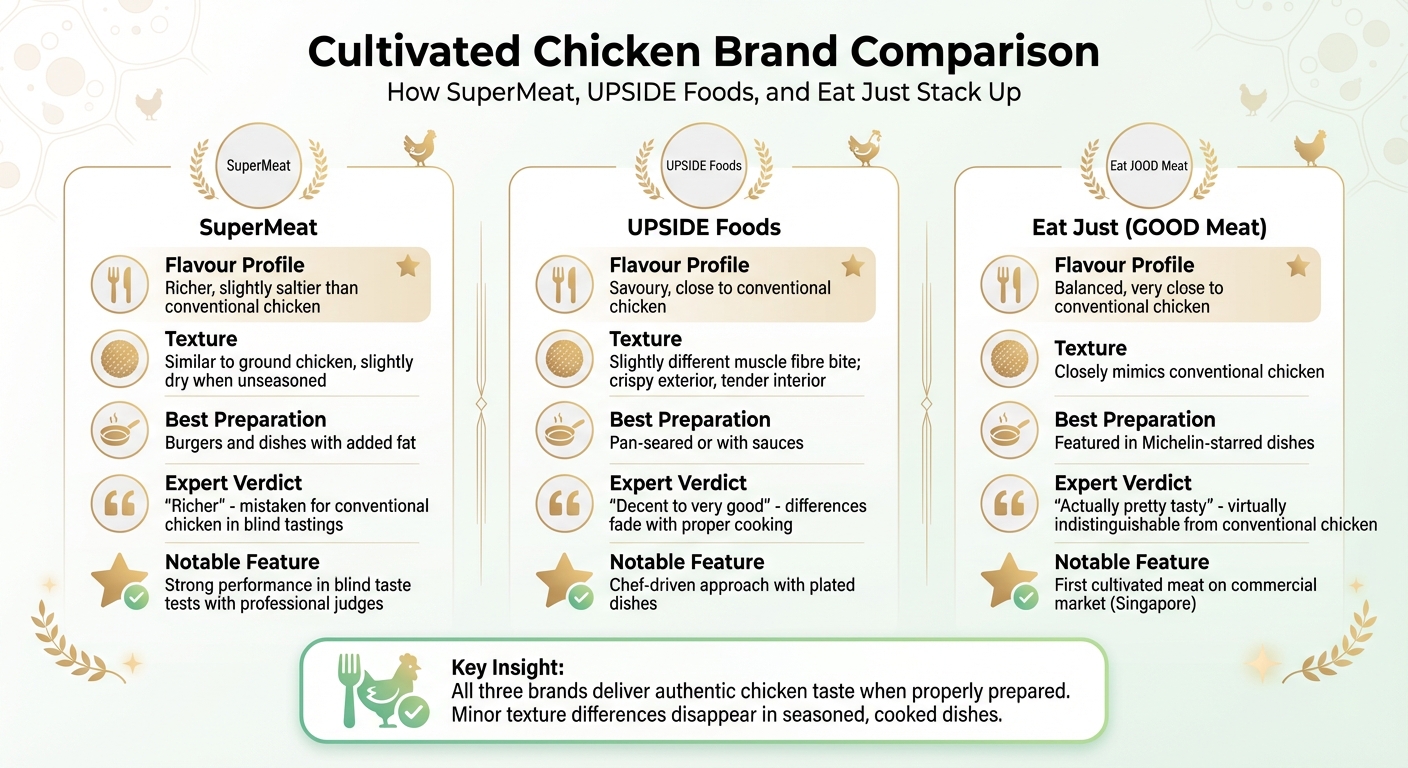
Cultivated Chicken Brand Comparison: SuperMeat vs UPSIDE Foods vs Eat Just
World's First Cultivated Meat Blind Tasting
Brand Comparisons: Flavour, Texture, and Appeal
Each brand brings its own twist to cultivated chicken while meeting the baseline expectations of taste and texture that consumers associate with conventional poultry. Below, we dive into how these brands stack up when it comes to flavour, texture, and overall appeal.
SuperMeat: Rich Flavour with a Slight Twist

SuperMeat's cultivated chicken has made waves in blind tastings. At one public event, professional judges, including a MasterChef judge and well-known chefs, noted that its flavour, texture, and overall feel were strikingly similar to conventional ground chicken[1][3].
One judge pointed out that the cultivated chicken had a richer flavour and a slightly saltier profile compared to its conventional counterpart, although its colour wasn’t an exact match[1]. In its unseasoned minced form, critics mentioned it was a bit on the dry side, suggesting that incorporating more fat and skin could enhance its juiciness. However, when prepared in dishes like a chicken burger at The Chicken restaurant, the cultivated chicken performed on par with traditional chicken in both taste and enjoyment.
Interestingly, two experts mistook the cultivated sample for conventional chicken, while another couldn’t identify a difference, underscoring how well SuperMeat’s product aligns with expectations for authentic chicken taste[1]. These results set a strong benchmark for comparison with other brands.
UPSIDE Foods: Crispy and Tender with a Slightly Different Bite

UPSIDE Foods has taken a chef-driven approach to showcase its cultivated chicken, focusing on plated dishes rather than plain tastings. According to a tasting described by Inverse, the chicken delivered a savoury and familiar flavour, comfortably fitting within the profile of conventional poultry[2].
The texture came remarkably close to traditional chicken, although tasters noted a subtle difference in the bite, with the muscle fibres lending it an "almost but not quite" feel[2]. When served as crispy pieces, the exterior was perfectly crisp, while the interior remained tender.
In plain tastings, some reviewers felt the differences in texture were more noticeable. However, when the chicken was pan-seared, sauced, or incorporated into composed dishes, these quirks became far less apparent. The overall experience was rated as decent to very good, showing that culinary preparation and seasoning can play a big role in closing any remaining gaps[2].
Eat Just: A Hit in Singapore

Eat Just's GOOD Meat cultivated chicken holds the distinction of being the first cultivated meat to hit the commercial market. Diners and food critics who tried the chicken bites reported that its taste and texture were virtually indistinguishable from conventional chicken[6][4].
In restaurant settings, including collaborations with Michelin-starred chefs, Eat Just’s chicken has been featured in classic dishes and hybrid creations. These familiar formats help diners connect with the product, making the experience feel both approachable and recognisable. Feedback from these early rollouts consistently highlights that the taste and texture closely mirror those of traditional chicken. What sets it apart is not its flavour or texture but the innovative production process behind it[4][5]. The focus has been on delivering a balanced and mainstream flavour profile, appealing to everyday palates without leaning too heavily into any particular taste or seasoning style.
Comparison Table of Cultivated Chicken Brands
Here’s a breakdown of how different cultivated chicken brands stack up when it comes to taste, texture, and preparation, compared to traditional chicken.
| Brand | Flavour Profile | Texture | Expert Feedback | Preparation Details |
|---|---|---|---|---|
| SuperMeat | Richer and more "chickeny" than traditional chicken, with a slightly saltier edge | Similar to conventional ground chicken but can feel drier when unseasoned; benefits from added fat | Michal Ansky mistook it for conventional chicken, calling it "richer"; Yair Yosefi noted slight differences but couldn't pinpoint it as cultivated[1][3] | Tested as unseasoned ground meat in blind tastings and later served in chicken burgers at The Chicken restaurant in Tel Aviv |
| UPSIDE Foods | Savoury and familiar, closely aligned with conventional chicken | Resembles traditional chicken but with subtle differences in muscle fibre bite; achieves a crispy exterior and tender interior when cooked | Described as "decent" overall; texture differences are more noticeable plain but less so when pan-seared or paired with sauces[2] | Used in chef-prepared dishes like grilled chicken breast and crispy pieces, with a focus on plated presentations |
| Eat Just (GOOD Meat) | Balanced flavour profile that’s nearly indistinguishable from traditional chicken | Closely mimics the texture of conventional chicken, especially in restaurant settings | Food critics and diners report that both taste and texture are almost identical to conventional chicken[4][5] | Featured in high-end restaurant dishes, often prepared by Michelin-starred chefs, and includes hybrid plant-cell products for a well-rounded taste |
What’s clear across the board is that cultivated chicken delivers on its promise of tasting like the real thing. The differences between brands often come down to how the meat is prepared and the subtle nuances in flavour and texture.
One thing all three brands highlight is the importance of how the chicken is cooked and seasoned. When these products are integrated into familiar dishes and prepared with care, minor texture differences fade into the background. This comparison lays a solid foundation for exploring how consumers perceive these new options in the next section.
sbb-itb-c323ed3
Key Takeaways from the Taste Test
The taste tests reveal that cultivated chicken is shaping up to be a solid alternative to conventional poultry. Brands like SuperMeat, UPSIDE Foods, and Eat Just have shown they can deliver on their promise of flavour and texture. A food critic in Singapore, after sampling Eat Just's GOOD Meat, remarked that it was:
"actually pretty tasty" [5]
Meanwhile, UPSIDE Foods’ chicken was described as:
"savoury and somewhat familiar" [2]
with a crispy exterior and tender interior. These results suggest that cultivated chicken is more than ready to feature in everyday meals.
The key lies in preparation. When cultivated chicken is crisped, seared, or used in familiar recipes, subtle differences in texture fade into the background. This ability to match the flavour and feel of traditional chicken could be the tipping point for changing consumer habits. If people find it indistinguishable from the chicken they’re used to, they’re far more likely to embrace it.
Consumer Acceptance of Cultivated Chicken
The consistent praise from chefs and food experts highlights how far cultivated chicken has come. Many professionals either couldn’t tell the difference or were genuinely impressed by its taste and texture. SuperMeat’s CEO, Ido Savir, has pointed out that while cost remains a hurdle - cultivated chicken currently costs about £15–16 per pound compared to £2.50–4 for conventional chicken [1][4] - the flavour is no longer an issue. As production scales up and prices drop, the sensory experience will play a big role in winning over the public.
This positive feedback extends to real-world settings too. Cultivated chicken has been served in restaurants worldwide, with diners often comparing it favourably to traditional chicken. For UK consumers, who relish comfort foods like Sunday roasts and chicken sandwiches, cultivated chicken could slip seamlessly into familiar dishes once it secures regulatory approval.
How Cultivated Meat Shop Can Help

As cultivated chicken edges closer to UK markets, platforms like Cultivated Meat Shop are helping pave the way for its acceptance. The site provides straightforward, easy-to-understand explanations of how cultivated meat is made, reassuring consumers that this new method doesn’t compromise on taste or safety. By showcasing brand profiles and sharing real-world taste test results from SuperMeat, UPSIDE Foods, and Eat Just, the platform helps UK shoppers know what to expect before these products reach their local stores.
The site also tackles the practical questions many British consumers might have, such as, “Will it taste like my usual roast chicken?” or “How do I cook it?” Drawing on evidence from international tastings, the platform demonstrates that cultivated chicken behaves just like conventional chicken when cooked, responding well to familiar recipes and seasonings. For those keen to stay updated on UK regulatory developments or join a waitlist, Cultivated Meat Shop provides a bridge between curiosity and confidence. When cultivated chicken finally hits UK shelves, early adopters will already see it as what it is: real meat, just grown in a different way.
Conclusion
Cultivated chicken has reached a point where its flavour and texture closely match those of traditional poultry. Companies like SuperMeat, UPSIDE Foods, and Eat Just have demonstrated this through blind tastings, where chefs and food experts often find it hard to distinguish between the two. When cooked using familiar methods, cultivated chicken delivers the same savoury taste and tender texture people expect from conventional chicken. This achievement paves the way for a shift in how we think about and consume meat.
For British households, this development offers an exciting opportunity to enjoy beloved chicken dishes while addressing environmental and ethical concerns. Cultivated chicken provides a genuine meat option with significantly lower emissions, reduced water usage, and no need for animal slaughter. It’s a promising step forward for a nation that values its culinary traditions yet seeks more sustainable and humane food choices.
As regulatory approvals advance and brands refine their products, cultivated chicken has the potential to redefine the way we approach meat. Platforms like Cultivated Meat Shop are helping consumers navigate this new category, offering insights into the taste, production process, and availability of cultivated chicken. With its arrival on UK shelves drawing closer, early adopters will soon experience it for what it truly is: real meat, grown in a way that’s kinder to the planet and animals alike.
FAQs
What does cultivated chicken taste like compared to traditional chicken?
Cultivated chicken is crafted to mimic the taste and texture of conventional chicken, but with some notable distinctions. Many describe its flavour as clean and consistent, offering the familiar taste of chicken without the variations typically influenced by an animal's diet or farming practices.
When it comes to texture, cultivated chicken often stands out for being tender and juicy. This is achieved through meticulous control over its growth conditions, which allows for the development of a muscle structure similar to traditional chicken while reducing any irregularities.
How can I prepare cultivated chicken to enhance its flavour?
To get the most out of the flavour of cultivated chicken, begin by marinating it with your favourite spices or herbs. This step not only boosts its taste but also helps keep the meat tender. When it’s time to cook, pay close attention to the temperature - keeping it moderate ensures the chicken stays juicy and prevents it from drying out. The key is to strike the right balance between seasoning and cooking, allowing you to savour its distinct qualities.
Is cultivated chicken more expensive than conventional chicken?
Cultivated chicken currently carries a higher price tag compared to traditional chicken. This stems from the significant expenses tied to research, development, and the advanced cell culture techniques necessary for its production.
That said, as the methods improve and production expands, costs are anticipated to decrease, paving the way for cultivated chicken to become more affordable over time.