América del Norte está liderando la carga en carne cultivada, un proceso donde se cultiva carne real a partir de células animales en biorreactores, omitiendo la agricultura tradicional. Este método utiliza hasta un 99% menos de tierra y un 90% menos de agua, abordando la sostenibilidad alimentaria a medida que la población global crece. Con $4.5 mil millones invertidos en 46 startups para principios de 2024, el sector está ganando impulso, particularmente después de que el USDA aprobó el pollo cultivado de UPSIDE Foods y GOOD Meat en 2023.
Aquí hay cinco startups destacadas de América del Norte que están transformando la producción de carne:
- UPSIDE Foods: Conocida por su pollo y carne de res cultivados, recaudó $608M para 2022 y logró la U.S. aprobación regulatoria completa.
- GOOD Meat: Un líder en pollo cultivado, fue el primero aprobado globalmente en Singapur (2020) y obtuvo U.S. autorización en 2023.
- Wildtype: Se especializa en salmón cultivado de calidad sushi, logrando la aprobación de la FDA para mariscos en 2025.
- Mission Barns: Se centra en la grasa de cerdo cultivada, lanzando los primeros productos de cerdo cultivado en 2025.
- Bond Pet Foods: Crea proteínas cultivadas para alimentos para mascotas, ofreciendo una alternativa sostenible para la nutrición animal.
Estas empresas están impulsando avances en la carne cultivada, abordando desafíos como el costo, la aprobación regulatoria y la aceptación del consumidor. Con inversiones e innovaciones continuas, la carne cultivada se acerca a convertirse en una fuente de proteína convencional.
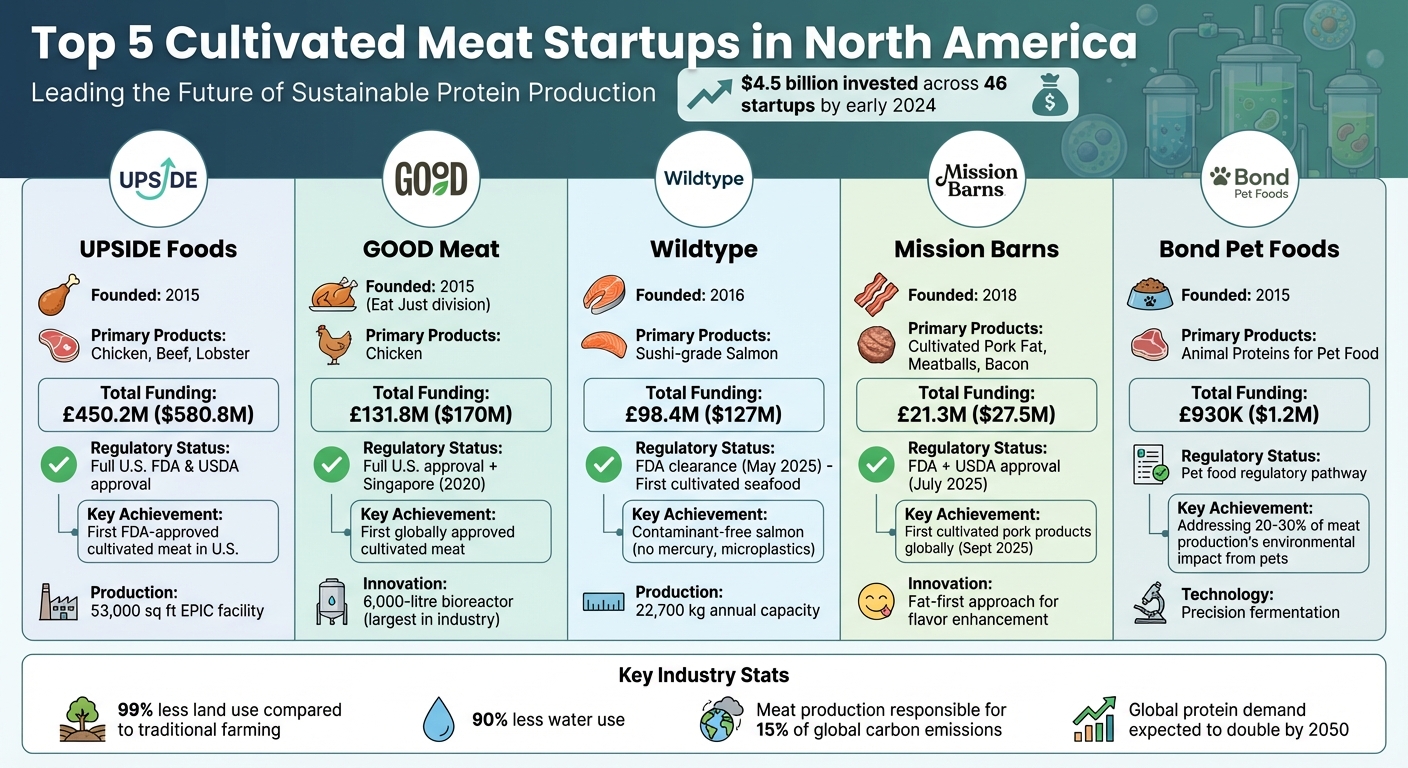
Las 5 principales startups de carne cultivada en América del Norte: Financiamiento, Productos & Comparación del Estado Regulatorio
EE. UU. aprueba 2 empresas de carne cultivada en laboratorio: Lo que necesitas saber #shorts
1. Upside Foods
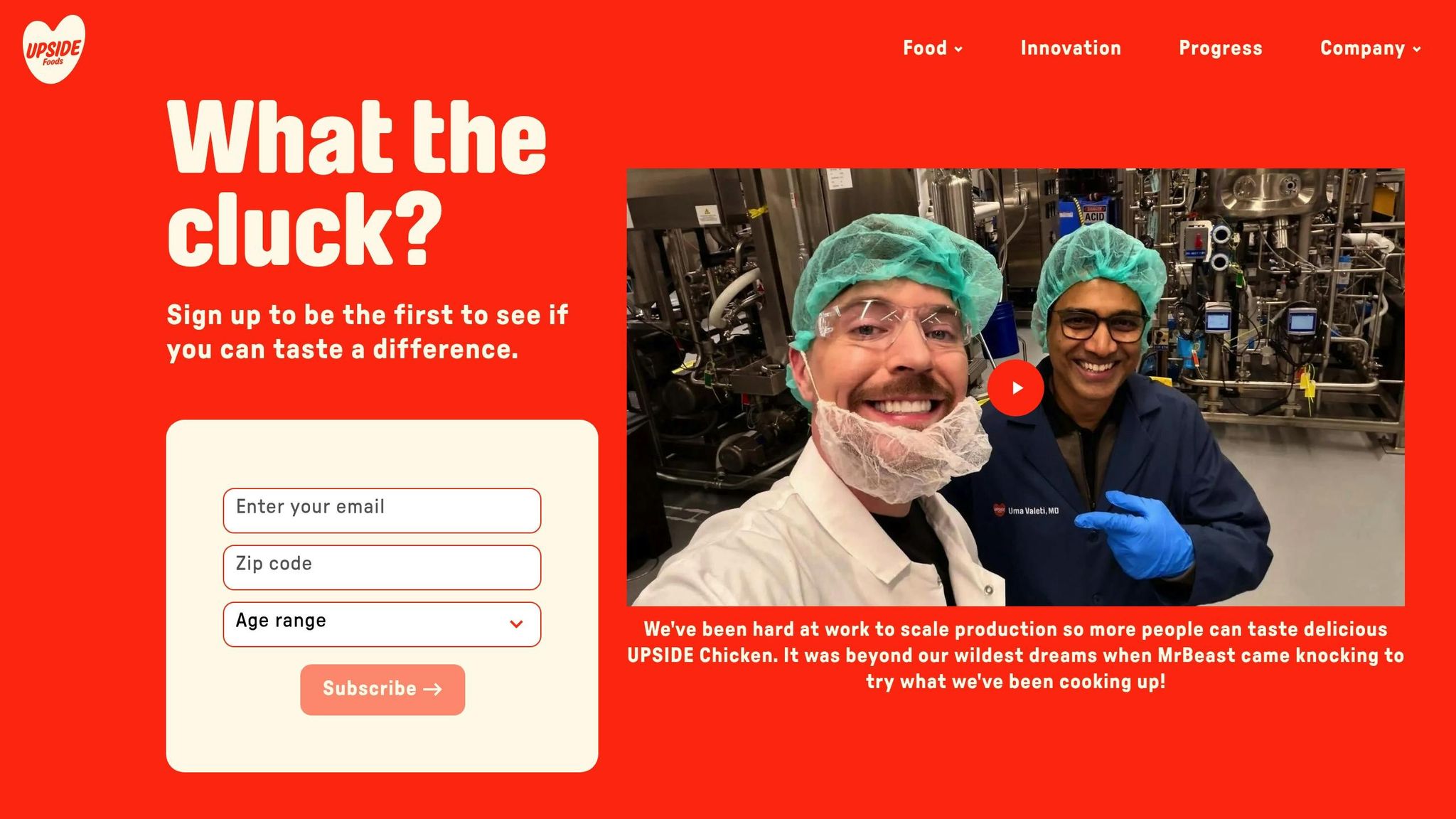
Fundada en 2015 bajo el nombre Memphis Meats, Upside Foods se ha destacado en la industria de la carne cultivada. Con sede en el área de la bahía de San Francisco, la empresa hizo historia al crear la primera albóndiga de carne de res cultivada del mundo en 2016. Posteriormente, introdujo su primer producto comercial de carne cultivada en los Estados Unidos.
Logros de Financiamiento
Upside Foods ha asegurado un respaldo financiero impresionante, recaudando $400 millones durante su ronda de financiamiento Serie C en abril de 2022.Esta ronda marcó el mayor logro de financiamiento en la industria de la carne cultivada, llevando la valoración de la empresa a más de $1 mil millones y llevando el financiamiento total a $608 millones para 2022 [6]. Los inversores incluyen actores importantes como Cargill y Tyson Foods , así como íconos tecnológicos como Bill Gates y Richard Branson. Firmas de inversión global como Temasek, SoftBank Vision Fund 2, y el Fondo de Crecimiento de Abu Dabi también están a bordo.
"UPSIDE ha alcanzado un punto de inflexión histórico, pasando de R&D a la comercialización." - Dr. Uma Valeti, CEO y Fundador, Upside Foods
Este financiamiento apoyó el desarrollo del Centro de Ingeniería, Producción e Innovación (EPIC) de 53,000 pies cuadrados en Emeryville, California. También facilitó la adquisición de Cultured Decadence en 2022, permitiendo a la empresa expandir su oferta más allá de las aves y la carne de res.
Hitos Regulatorios
En noviembre de 2022, la FDA emitió una carta de "sin preguntas", confirmando la seguridad del pollo cultivado de Upside Foods. Esto fue seguido por la aprobación de etiqueta del USDA y un Certificado de Inspección en junio de 2023, completando el proceso regulatorio [7]. Poco después, en julio de 2023, la empresa cumplió con su primer pedido comercial de pollo cultivado para Bar Crenn en San Francisco. Upside Foods también ha contribuido a dar forma a las directrices de la industria al co-fundar la Alianza para la Innovación en Carne, Aves y Mariscos en 2019.
Estos logros regulatorios han sentado las bases para futuros avances en tecnologías de producción.
Innovación de Productos
Upside Foods ha reducido significativamente los costos de producción mientras mantiene altos estándares. En 2016, producir carne de res cultivada costaba $18,000 por libra.Para junio de 2017, esta cifra había caído a menos de $2,400 por libra [1]. La empresa ha introducido innovaciones como alimentos para cultivos celulares sin componentes animales y líneas celulares que eliminan la necesidad de factores de crecimiento derivados de plaquetas. Su gama de productos se ha expandido desde filetes de pollo texturizados hasta productos molidos, incluyendo "Chicken Essentials", una mezcla de pollo cultivado e ingredientes de origen vegetal. Todo el ciclo de producción - desde la célula hasta la cosecha - toma aproximadamente tres semanas [8].
"Cuando lo probé, pensé... está bien, este es el futuro. Me encanta UPSIDE." - Dominique Crenn, Chef de 3 Estrellas Michelin
Impacto en el Mercado
Upside Foods ha preparado el escenario para el sector de la carne cultivada en América del Norte a través de sus éxitos técnicos y regulatorios.El enfoque transparente de la empresa, que incluye instalaciones de producción con paredes de vidrio y visitas públicas al centro EPIC, ha tenido como objetivo aliviar las preocupaciones de los consumidores sobre la tecnología. En junio de 2024, Upside Foods organizó un evento de degustación pública en Miami llamado "Libertad de Comida", diseñado para resaltar tanto el interés del consumidor como la seguridad del producto [1].
A pesar de estos logros, la empresa ha enfrentado obstáculos operativos. En febrero de 2024, se cancelaron los planes para una instalación de producción a gran escala en Illinois, con el enfoque cambiando hacia la expansión de operaciones en California. Aun así, Upside Foods continúa liderando la carga para llevar la carne cultivada a los mercados convencionales, estableciendo un alto estándar para otras startups en el campo.
2.GOOD Meat (Eat Just )
GOOD Meat, la división de carne cultivada de Eat Just, hizo titulares en diciembre de 2020 cuando se convirtió en la primera empresa en obtener la aprobación regulatoria para carne cultivada en Singapur. Aprovechando este éxito, la empresa centró su atención en América del Norte, asegurando la autorización federal en 2023 tanto de la FDA como del USDA para sus productos de pollo cultivado.
Logros de financiamiento
En mayo de 2021, GOOD Meat recaudó £170 millones de inversores como UBS O'Connor, K3 Ventures y Graphene Ventures. Esto siguió a una inversión de £200 millones en su empresa matriz, Eat Just, a principios de marzo. A mediados de 2021, el capital total recaudado alcanzó £370 millones, estableciendo un nuevo récord de financiamiento en la industria de la carne cultivada, superando el anterior referente mantenido por UPSIDE Foods [9].
"Esta inversión...puntos hacia lo que está por venir: la carne sin matar animales reemplazará la carne convencional en algún momento de nuestras vidas. Cuanto más rápido hagamos que eso suceda, más saludable será nuestro planeta." - Josh Tetrick, cofundador y CEO de Eat Just [9]
Los fondos se destinaron a expandir la capacidad de producción y avanzar en la investigación, con un enfoque en el mercado global de pollo de £193 mil millones [9].
Hitos Regulatorios
El viaje regulatorio de GOOD Meat comenzó con su éxito en Singapur y continuó con una carta de "sin preguntas" de la FDA en marzo de 2023, seguida de la aprobación de etiqueta del USDA en junio de 2023. En julio de 2023, el pollo cultivado de GOOD Meat debutó en China Chilcano, un restaurante en Washington, D.C. del chef José Andrés [10].
Sin embargo, el camino regulatorio no ha estado exento de obstáculos.En mayo de 2024, Florida y Alabama introdujeron prohibiciones a nivel estatal sobre la producción y venta de carne cultivada, creando desafíos a pesar de las aprobaciones federales. Estas regulaciones conflictivas subrayan las complejidades políticas que enfrenta la industria en América del Norte.
En medio de estos desarrollos, GOOD Meat también ha avanzado en la innovación de productos.
Innovación de Productos
GOOD Meat ha adoptado un enfoque híbrido, combinando células animales cultivadas con proteínas de origen vegetal para optimizar el sabor, la textura y la eficiencia de costos [5]. Su enfoque en el pollo cultivado ha llevado a su incorporación en una variedad de platos, incluyendo ensaladas, empanadillas y salteados [9].
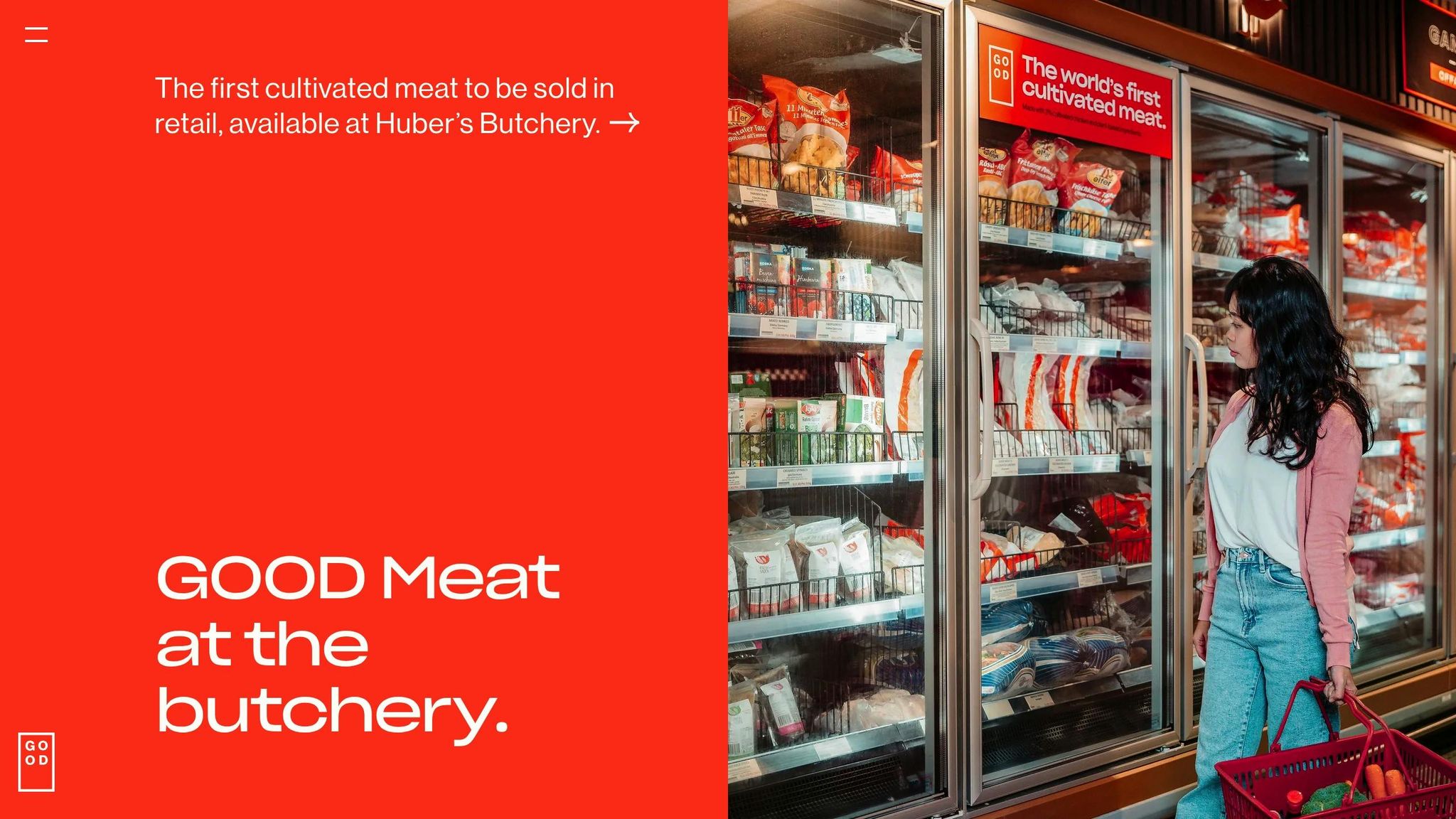
En enero de 2023, la empresa anunció planes para instalar un bioreactor masivo de 6,000 litros en Singapur, uno de los más grandes de la industria [2]. Para 2024, GOOD Meat introdujo "GOOD Meat 3" en Huber's Butchery en Singapur, un producto que contiene un 3% de células cultivadas mezcladas con ingredientes de origen vegetal. Esta fue la primera vez que un producto de carne cultivada estuvo disponible para su compra en un entorno minorista tradicional [3] [10].
"GOOD Meat es carne real hecha sin destruir un bosque o quitar una vida." - GOOD Meat [10]
Impacto en el Mercado
Las innovaciones de GOOD Meat y sus primeras victorias regulatorias la han posicionado como líder en el espacio de la carne cultivada. Su logro de ser el primero en el mercado a nivel mundial y asegurar U.S. la aprobación regulatoria ha consolidado su influencia en América del Norte. Las encuestas indican que el 70% de U.S. los consumidores están abiertos a cambiar a pollo cultivado [9]. Las asociaciones con chefs como José Andrés han ayudado a introducir la carne cultivada como una opción de alta cocina, generando confianza a través de experiencias gastronómicas familiares.
Actualmente, el pollo cultivado cuesta alrededor de £20 por libra, en comparación con £3–£5 por libra para el pollo convencional [5]. Aunque estas diferencias de precio siguen siendo un desafío, las asociaciones estratégicas y los éxitos regulatorios de GOOD Meat han sentado las bases para llevar la carne cultivada a una audiencia más amplia. Superar las barreras de costo y navegar por las regulaciones regionales será fundamental para su éxito a largo plazo en el mercado.
3. Wildtype
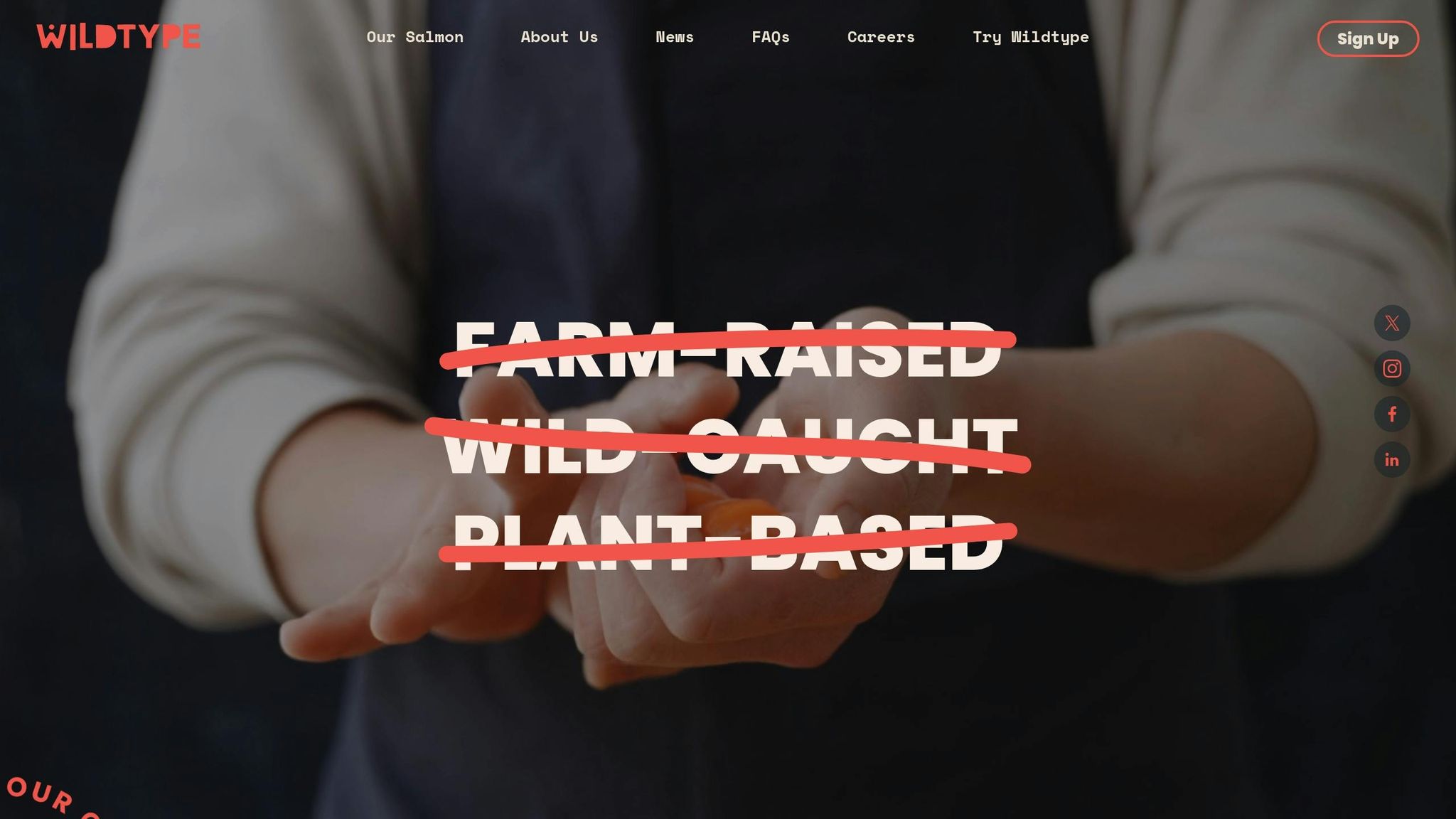
Aunque muchas empresas de carne cultivada se centran en el pollo y la carne de res, Wildtype ha encontrado un nicho en los mariscos cultivados. Con sede en San Francisco, la empresa se especializa en la producción de salmón cultivado de calidad para sushi, posicionándose de manera única en el mercado.
Logros de financiamiento
En febrero de 2022, Wildtype recaudó una impresionante suma de £77 millones ($100 millones) en financiamiento de la Serie B, convirtiéndose en la ronda de financiamiento más grande para cualquier empresa de mariscos cultivados. Esto elevó su capital total a más de £95 millones ($123 millones) [11][12][14]. La ronda atrajo a inversores de alto perfil como Leonardo DiCaprio, Jeff Bezos (a través de Bezos Expeditions), la Footprint Coalition de Robert Downey Jr., y L Catterton. Anteriormente, una ronda de £9.6 millones ($12.5 millones) de la Serie A permitió la construcción de la primera planta piloto de mariscos cultivados operativa en el mundo en San Francisco. A finales de 2021, esta instalación tenía la capacidad de producir 22,700 kg (50,000 lb) de salmón cultivado anualmente.La financiación de la Serie B ha apoyado desde entonces la expansión a una instalación más grande en San Francisco y el desarrollo de una nueva planta de producción en el Pacífico Noroeste.
"El pensamiento organizador allí fue construir una planta piloto con el dinero de la Serie A... Y construimos la primera planta piloto de mariscos cultivados operativa del mundo." – Justin Kolbeck, CEO, Wildtype [11]
Este respaldo financiero refleja la ambición de la empresa de remodelar la producción de mariscos junto a sus contrapartes de carne cultivada.
Hitos Regulatorios
Wildtype logró un hito regulatorio significativo el 28 de mayo de 2025, convirtiéndose en la primera empresa en recibir la aprobación de la FDA para mariscos cultivados en el U.S. [13][14]. La carta de "sin preguntas" de la FDA confirmó que el salmón coho cultivado de Wildtype es tan seguro como el pescado tradicional. Tras esta aprobación, el salmón cultivado de Wildtype debutó en junio de 2025 en Kann, un restaurante de Portland propiedad del chef galardonado con el premio James Beard, Gregory Gourdet. En agosto de 2025, el chef Adam Tortosa introdujo el salmón Wildtype en los menús omakase de Robin, un restaurante de alta gama en San Francisco, marcando su primera aparición comercial en su estado natal. Sin embargo, no todos los estados han adoptado la carne cultivada. Varios, incluidos Florida y Alabama, han implementado prohibiciones, lo que llevó a Wildtype a presentar una demanda federal contra Texas en septiembre de 2025 para impugnar su prohibición [12][15].
Innovación de Producto
Wildtype emplea un enfoque técnico distintivo en el espacio de la carne cultivada, utilizando células mesenquimatosas de salmón coho joven. Estas células están diseñadas para crecer en suspensión líquida, eliminando la necesidad de adherirse a una superficie [14]. El proceso de cultivo ocurre en biorreactores que se asemejan a los utilizados en la elaboración de cerveza.
"Les proporcionamos los mismos nutrientes que los peces consumirían en la naturaleza... y esencialmente los hacemos crecer en un sistema que se parece un poco a una cervecería." – Justin Kolbeck, Co-fundador, Wildtype [16]
La empresa también ha reducido los costos de producción al eliminar componentes costosos como la insulina y la albúmina de su medio de cultivo [14]. En 2019, un solo rollo de salmón picante costaba alrededor de £154 ($200) para producir, pero Wildtype ha reducido significativamente los costos desde entonces, acercándolos a los precios del salmón convencional. Además de bloques de calidad para sushi ("saku") y láminas que se pueden moldear en varios cortes, los productos de Wildtype conservan los beneficios nutricionales del pescado, como los ácidos grasos omega-3, mientras evitan contaminantes como el mercurio, microplásticos, parásitos y antibióticos.
Impacto en el Mercado
La entrada temprana de Wildtype en el mercado lo posiciona como un líder en la solución de los desafíos urgentes del marisco. El consumo global de pescado ha aumentado aproximadamente un 30% desde 1998 y se espera que aumente otro 80% para 2050. Mientras tanto, más del 90% de las poblaciones de peces globales ya están completamente explotadas o sobreexplotadas [12]. Para abordar esto, Wildtype se está expandiendo más allá de la alta cocina a través de asociaciones con SNOWFOX, que opera en más de 1,200 tiendas de comestibles, y Pokéworks, que tiene 65 ubicaciones de restaurantes de comida rápida casual. Esta estrategia podría ayudar a Wildtype a acceder al mercado global de mariscos de £198 mil millones ($257 mil millones) [12].
"En los primeros días, seremos un negocio muy limitado en cuanto a suministro. El mercado de mariscos es de 350 mil millones de libras al año, una cantidad asombrosa de volumen.Y, estar en el menú de cinco o seis restaurantes es solo una gota en el océano." – Justin Kolbeck, CEO, Wildtype [11]
Los logros regulatorios y los esfuerzos legales de Wildtype pueden abrir puertas para una mayor aceptación de la carne cultivada en América del Norte. Junto a empresas como Upside Foods y GOOD Meat, Wildtype destaca el liderazgo de la región en el avance de la tecnología de alimentos cultivados.
sbb-itb-c323ed3
4. Misión Barns
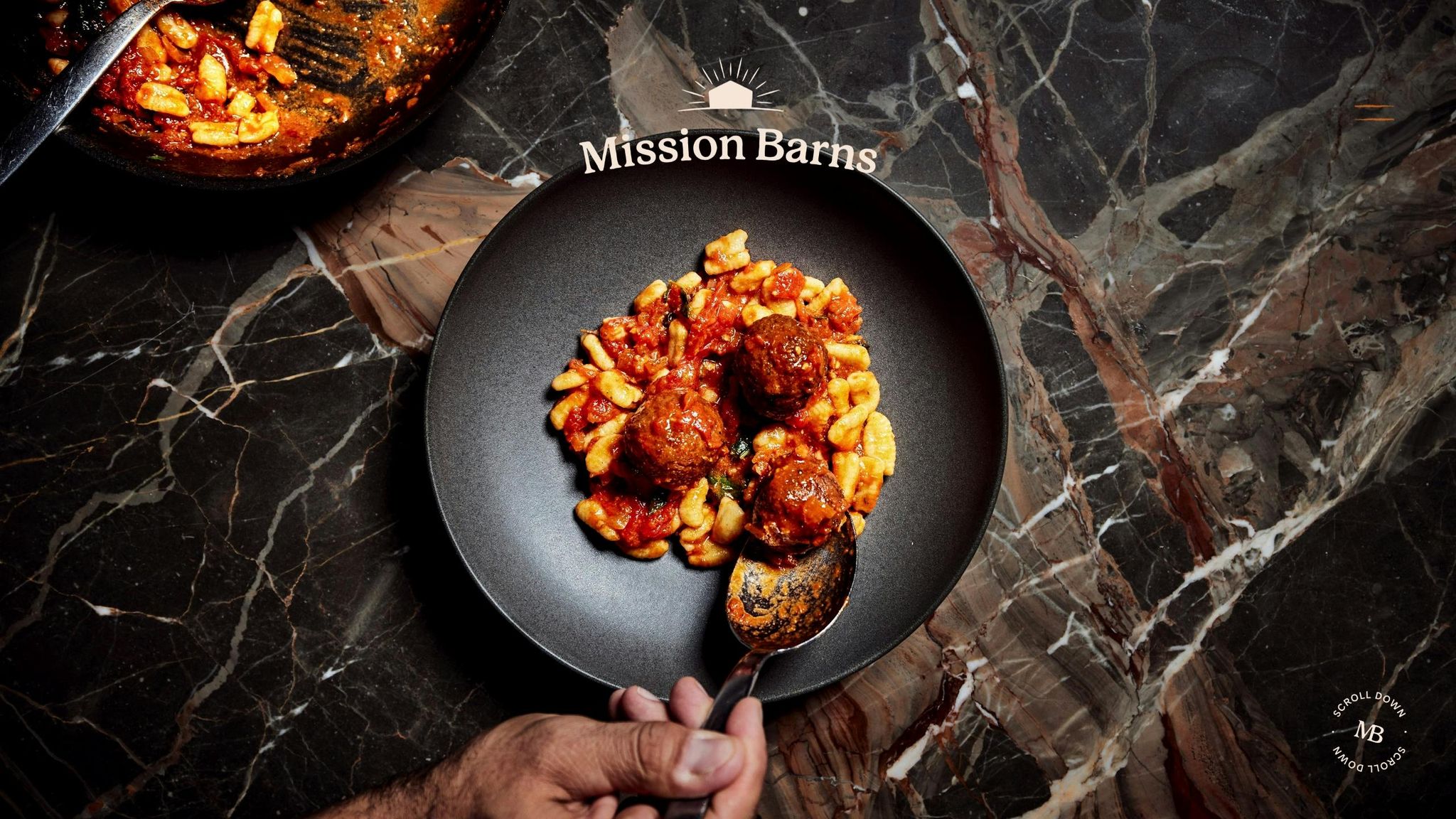
Siguiendo los avances realizados por empresas como Upside Foods, GOOD Meat y Wildtype, Misión Barns aporta un nuevo enfoque a la escena de la carne cultivada al centrarse en la grasa. Con sede en el área de la bahía de San Francisco, esta empresa se especializa en grasa de cerdo cultivada, que combina con proteínas vegetales para crear productos híbridos como albóndigas, tocino y salchichas.
Logros de financiamiento
Fundada en 2018, Mission Barns ha recaudado más de £46 millones (US$60 millones) en financiamiento [17]. En abril de 2021, aseguró £18.5 millones (US$24 millones) en financiamiento de la Serie A de inversores como Lever VC, Gullspang Re:Food (respaldado por Oatly), Humboldt Fund y Green Monday Ventures. Este financiamiento ha apoyado la construcción de una planta de producción piloto en San Francisco y el desarrollo de su tecnología patentada Mission Fat. La empresa opera con un enfoque de bajo capital, licenciando su tecnología de biorreactor a empresas alimentarias establecidas.
"Esto nos permitirá escalar mucho más rápido sin necesidad de desplegar tantos millones de dólares en capex inicial." – Eitan Fischer, Fundador y CEO, Mission Barns [18]
Este apoyo financiero también ha ayudado a Mission Barns a avanzar rápidamente en el ámbito regulatorio.
Hitos Regulatorios
En marzo de 2025, Mission Barns se convirtió en la primera empresa en el mundo en recibir la autorización regulatoria para grasa de cerdo cultivada, obteniendo una carta de "Sin Preguntas" de la FDA [19]. Para julio de 2025, había pasado la inspección del USDA y obtenido la aprobación de la etiqueta, convirtiéndose en la cuarta empresa de Carne Cultivada en U.S. lograr la aprobación regulatoria completa, después de UPSIDE Foods, GOOD Meat y Wildtype [17]. Poco después, en septiembre de 2025, Mission Barns hizo historia al lanzar sus albóndigas y tocino cultivados en Fiorella Sunset, un restaurante en San Francisco. Esto marcó la primera venta comercial de productos de cerdo cultivados a nivel mundial. En ese mismo trimestre, sus productos llegaron a las estanterías de una tienda Sprouts Farmers Market en Oakland, convirtiéndose en los primeros artículos de Carne Cultivada vendidos en un U.S. supermercado [17].
Con las aprobaciones regulatorias aseguradas, la empresa centró su atención en refinar y expandir su oferta de productos.
Innovación de Productos
Mission Barns ha adoptado un enfoque "primero la grasa", creyendo que la grasa es esencial para ofrecer sabor y jugosidad. La empresa argumenta que la grasa puede resolver los desafíos de sabor que han obstaculizado la adopción más amplia de proteínas alternativas [17]. Su grasa de cerdo cultivada crece más rápido que el tejido muscular, requiere insumos menos costosos y mejora significativamente el sabor y la textura incluso en pequeñas cantidades. Para lograr esto, Mission Barns desarrolló un sistema de biorreactor patentado diseñado para el crecimiento de alta densidad de células de grasa de cerdo, diferenciándose de los sistemas tradicionales basados en suspensión.
La gama de productos de la empresa incluye actualmente albóndigas al estilo italiano, tocino ahumado de manzano, pepperoni, chorizo y salchichas para el desayuno, todos incorporando su grasa cultivada.
"Nuestra misión siempre ha sido resolver la mayor barrera para las proteínas alternativas: el sabor. La grasa cultivada es la clave." – Cecilia Chang, Directora de Negocios, Mission Barns [17]
Impacto en el Mercado
Armada con sus éxitos tecnológicos y regulatorios, Mission Barns ahora se centra en expandir su presencia en el mercado. Los estudios sugieren que su grasa cultivada podría alcanzar la paridad de costos con la grasa de cerdo convencional a una escala de producción de 20,000 litros [17]. Más allá del U.S. , la empresa está buscando activamente la aprobación regulatoria en Singapur y observando mercados en Hong Kong, Europa y China continental a través de asociaciones con productores como HEROTEIN [17][19]. Su estrategia de producto híbrido y modelo de licencias podrían acelerar la entrada al mercado de la industria de la carne cultivada, especialmente dado que se espera que la demanda global de carne se duplique para 2050 [20][21].
Mission Barns también está trabajando para construir la aceptación del consumidor a través de colaboraciones y eventos. Por ejemplo, su asociación con Silva Sausage ha permitido una producción a gran escala, mientras que los eventos de degustación en Berkeley Bowl West, que se llevaron a cabo entre noviembre de 2025 y febrero de 2026, han presentado sus productos a una audiencia más amplia [19].
5. Bond Pet Foods
Llevando el concepto de carne cultivada más allá de las dietas humanas, Bond Pet Foods está redefiniendo la nutrición de las mascotas. Establecida en 2015 por Rich Kelleman en Nederland, Colorado, la empresa utiliza fermentación de precisión para crear proteínas como pollo, cordero y salmón sin agricultura tradicional.Este método aborda un problema urgente: las mascotas son responsables del 20% al 30% del impacto ambiental global vinculado a la producción de carne [22].
Logros de financiamiento
Bond Pet Foods ha recaudado £930,000 (US$1.2 millones) para avanzar en su tecnología de fermentación, escalar sus operaciones y establecer una nueva instalación de producción con un equipo de liderazgo fortalecido [4][22].
Innovación de productos
Las proteínas fermentadas de la empresa son nutricionalmente completas, fáciles de digerir y reflejan el perfil nutricional de la carne convencional. Todo esto se logra con significativamente menos recursos y una huella de carbono mucho más pequeña [22].
"Empleando procesos similares a los utilizados en la elaboración de cerveza artesanal, podemos cosechar pollo, cordero, salmón y otras proteínas de alto valor que pueden servir como base para recetas de comida para mascotas, con significativamente menos recursos e intensidad de carbono - y sin dañar a otros animales." – Bond Pet Foods [22]
Impacto en el Mercado
Bond Pet Foods demuestra cómo la tecnología de Carne Cultivada puede revolucionar la comida para mascotas. Al ofrecer proteínas de alta calidad y sostenibles, proporciona una alternativa a los subproductos de baja calidad que se utilizan típicamente en la comida para mascotas. La industria de la comida para mascotas también presenta una ruta más rápida hacia la comercialización, con menos obstáculos regulatorios en comparación con la producción de alimentos para humanos [22][23]. Esta innovación muestra cómo la Carne Cultivada puede expandirse a diversas áreas, demostrando su potencial más allá del consumo humano.
Tabla de Comparación de Startups
A continuación se presenta un breve resumen de cómo diferentes startups en el espacio de la carne cultivada están definiendo sus nichos. La tabla a continuación compara su financiación, enfoque de producto y progreso regulatorio, ofreciendo una visión clara de sus estrategias.
| Startup | Tipos de Productos Principales | Financiación Total | Estado Regulatorio | Enfoque de Mercado Clave |
|---|---|---|---|---|
| Upside Foods | Pollo, Carne de Res, Langosta | £450.2 millones ($580.8M) [4] | Completo U.S. autorización regulatoria (FDA & USDA) [26][27] | Amplio portafolio de carne para consumidores; primera aprobación de la FDA [25] |
| GOOD Meat | Pollo | £131.8 millones ($170M) [4] | Autorización U.S. regulatoria completa; primera aprobación global (Singapur, 2020) [4][26][27] | Aumento de escala comercial; primero en el mercado global |
| Tipo salvaje | Salmonete de calidad sushi | £98.4 millones ($127M) [24] | Esperando la aprobación regulatoria | Mariscos de alta gama; pescado libre de contaminantes [24][25] |
| Misión Barns | Grasa cultivada & Carne | £21.3 millones ($27.5M) [4] | Carta de "sin preguntas" de la FDA para grasa de cerdo cultivada [27] | Mejora de sabor y textura para alternativas |
| Bond Pet Foods | Proteína animal para mascotas | £930,000 ($1.2M) [4] | Ruta regulatoria para alimentos para mascotas | Nutrición sostenible para mascotas; proteínas libres de crueldad |
Esta comparación destaca las diversas estrategias que están dando forma al futuro de la carne cultivada. Upside Foods se destaca con la mayor financiación de £450.2 millones, centrándose en una amplia gama de carnes para consumidores y asegurando la U.S. autorización regulatoria completa. GOOD Meat, con £131.8 millones en financiación, lidera en hitos regulatorios globales, siendo el primero aprobado en Singapur.
Wildtype está creando un nicho en mariscos premium con £98.4 millones recaudados, mientras que Mission Barns se enfoca en ingredientes funcionales como la grasa cultivada, respaldado por £21.3 millones. Mientras tanto, Bond Pet Foods está innovando en nutrición sostenible para mascotas con £930,000, beneficiándose de vías regulatorias más simples en el sector de alimentos para mascotas [4] .
La tabla también subraya cómo Upside Foods y GOOD Meat están a la vanguardia en aprobaciones regulatorias, mientras que Mission Barns está avanzando en el mercado de grasa cultivada.El enfoque de cada empresa refleja su enfoque único hacia la innovación y la entrada al mercado.
Conclusión
El progreso destacado anteriormente muestra cómo cinco startups norteamericanas están convirtiendo la Carne Cultivada de un experimento de laboratorio en una realidad comercial. Hitos clave, como las aprobaciones cruciales del USDA y las primeras autorizaciones internacionales, han abierto puertas para estos avances [2] .
Las inversiones en infraestructura son igualmente notables. La instalación EPIC de Upside Foods, por ejemplo, produce más de 22,680 kg de Carne Cultivada cada año, mientras que otros proyectos señalan un cambio de ensayos a pequeña escala a producción a gran escala [2]. Esta transición subraya la creciente madurez y preparación del mercado del sector.
La innovación no se limita a carnes tradicionales como el pollo y la carne de res.En junio de 2025, Wildtype recibió la aprobación de la FDA para su producto de mariscos cultivados, centrándose en salmón de calidad premium para sushi que evita contaminantes oceánicos [29]. De manera similar, Mission Barns obtuvo aprobación a principios de 2025 para su grasa animal producida en biorreactores, que mejora el sabor y la textura de las alternativas a base de plantas [29]. Incluso la nutrición para mascotas está siendo transformada, con Bond Pet Foods aprovechando soluciones sostenibles para nuestros compañeros peludos. Estos desarrollos destacan la adaptabilidad de la Carne Cultivada en diversos mercados.
El apoyo financiero detrás de esta industria cuenta una historia convincente. Desde 2016, el sector de proteínas alternativas ha asegurado más de £15 mil millones en financiamiento, con empresas de Carne Cultivada recaudando £57 millones solo en 2025 [28]. Los gobiernos también están interviniendo, con el USDA comprometiendo £11.1 millón a métodos de producción innovadores y Canadá contribuyendo con CAD $7.2 millones a través de su Programa AgriInnovate [29]. Este respaldo combinado de inversores privados e iniciativas públicas está ayudando a la industria a acercarse a la paridad de costos con la carne tradicional, con precios que se acercan a los de opciones convencionales premium [2].
Estas startups están liderando una nueva categoría de producción de alimentos. Al abordar los desafíos ambientales vinculados a la carne convencional - que es responsable de alrededor del 15% de las emisiones globales de carbono [21] - y atender la creciente demanda de proteínas que se espera se duplique para 2050, están ofreciendo soluciones prácticas a uno de los mayores obstáculos de la agricultura. A medida que la producción aumenta y los costos disminuyen, la Carne Cultivada está lista para convertirse en una opción común para los consumidores que buscan proteínas éticas y sostenibles.Estos avances no solo remodelan cómo se produce la comida, sino que también allanan el camino hacia un futuro más sostenible.
Para obtener más información sobre el futuro de la carne cultivada, visita
Preguntas frecuentes
¿Cuándo se venderá carne cultivada en las tiendas del Reino Unido?
La carne cultivada podría pronto estar en las estanterías del Reino Unido. En EE. UU., empresas como Upside Foods y GOOD Meat ya han recibido aprobación regulatoria, marcando un paso significativo hacia adelante para la industria. Con estos desarrollos allanando el camino, el Reino Unido podría no estar muy atrás en hacer que la carne cultivada sea accesible para sus consumidores.
¿Es segura la carne cultivada para comer?
La carne cultivada ha recibido aprobación para su venta en múltiples países, lo que indica que los reguladores confían en su seguridad. En la actualidad, no hay datos científicos que sugieran que representa algún riesgo para el consumo.
¿Por qué algunos estados de EE. UU. están prohibiendo la carne cultivada?
Algunos estados en EE. UU. están avanzando para prohibir la carne cultivada, impulsados por líderes políticos que la desestiman como "carne falsa" y afirman que no se alinea con las alternativas alimentarias naturales. Por ejemplo, el gobernador de Florida, Ron DeSantis, ha sugerido hacer ilegal su producción y venta. Estas restricciones a menudo surgen de preocupaciones sobre cómo se adapta este nuevo producto dentro de las tradiciones y sistemas alimentarios establecidos.