The Middle East is becoming a hub for cultivated meat innovation, driven by food security concerns, limited farmland, and water scarcity. Governments in the Gulf, particularly in the UAE, are heavily investing in this sector through initiatives like Abu Dhabi’s AGWA cluster. Consumer interest is also high, with 87% of Middle Eastern consumers open to trying cultivated chicken.
Here are four key startups leading the charge:
- Aleph Farms: Based in Israel, it was the first company to gain regulatory approval for cultivated beef. Its products, like the Aleph Cuts Petit Steak, are cholesterol-reduced and tailored for local markets.
- Orbillion Bio: Focuses on premium cuts like Wagyu beef and lamb. Now a subsidiary of Fork & Good, it has established a presence in Abu Dhabi to support regional food security.
- Believer Meats (formerly Future Meat Technologies): Known for its cost-efficient production methods, it is setting up a regional hub in Abu Dhabi to expand its cultivated chicken offerings.
- Mirai Foods: A Swiss company targeting high-end beef cuts like Sirloin and Rib Eye, aligning with Middle Eastern dining preferences.
These startups are addressing local challenges by reducing reliance on imports and working towards halal certification, making cultivated meat a viable protein source for the region.
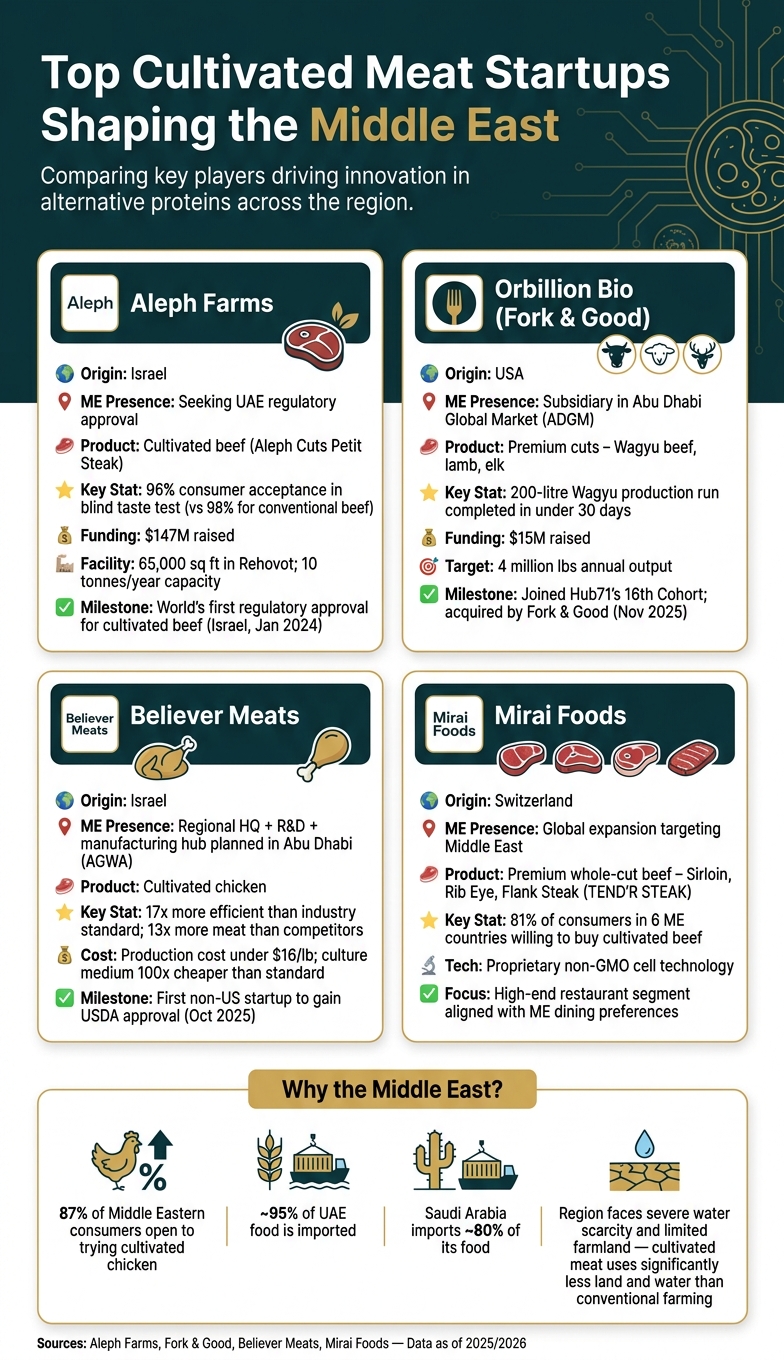
Top Cultivated Meat Startups in the Middle East: Key Facts & Figures
Israel's Cultured Meat
1. Aleph Farms
Aleph Farms is leading the way in cultivated meat innovation in the Middle East, achieving major regulatory milestones and earning consumer approval for its products. In January 2024, this Israeli company became the first in the world to secure regulatory approval for cultivated beef. Israel's Ministry of Health issued a "No Questions" letter for its flagship product, the Aleph Cuts Petit Steak, which is grown from the cells of a Black Angus cow [5]. This milestone opens the door for further regulatory progress in other important Middle Eastern markets.
"We believe that addressing joint challenges like food security is the best way to ensure the prosperity of the Middle East and other parts of the world that rely heavily on massive food imports." - Didier Toubia, CEO and Co-Founder, Aleph Farms [5]
The company is actively seeking regulatory approval in the UAE, recognising the region's potential for adopting cultivated meat [6][7]. Their decentralised production model, which relies on regional hubs rather than massive facilities, helps to cut costs while catering to local market needs. This partnership-driven approach is designed to be both efficient and adaptable.
In March 2026, Aleph Farms conducted a blind taste test with 60 regular meat-eaters. The results were impressive: 96% of participants accepted the cultivated steak, a figure almost identical to the 98% acceptance rate for traditional beef [7]. Nutritionally, Aleph Cuts offer 80% less cholesterol and nine times more polyunsaturated fat than conventional beef. They also scored slightly better on tenderness, with a rating of 7.6/10 compared to 7.3/10 for traditional beef [7]. These findings strengthen the case for expanding into larger markets.
To date, Aleph Farms has raised £116 million (around $147 million) in funding. The company operates a 6,040 sq m (65,000 sq ft) facility in Rehovot, Israel, with an annual production capacity of 10 tonnes of cultivated steak [6][7]. Additionally, by removing animal-derived components like Fetal Bovine Serum from its production process, the company has addressed a major hurdle for obtaining Halal certification, a crucial factor for entering Gulf markets [5][8].
2. Orbillion Bio
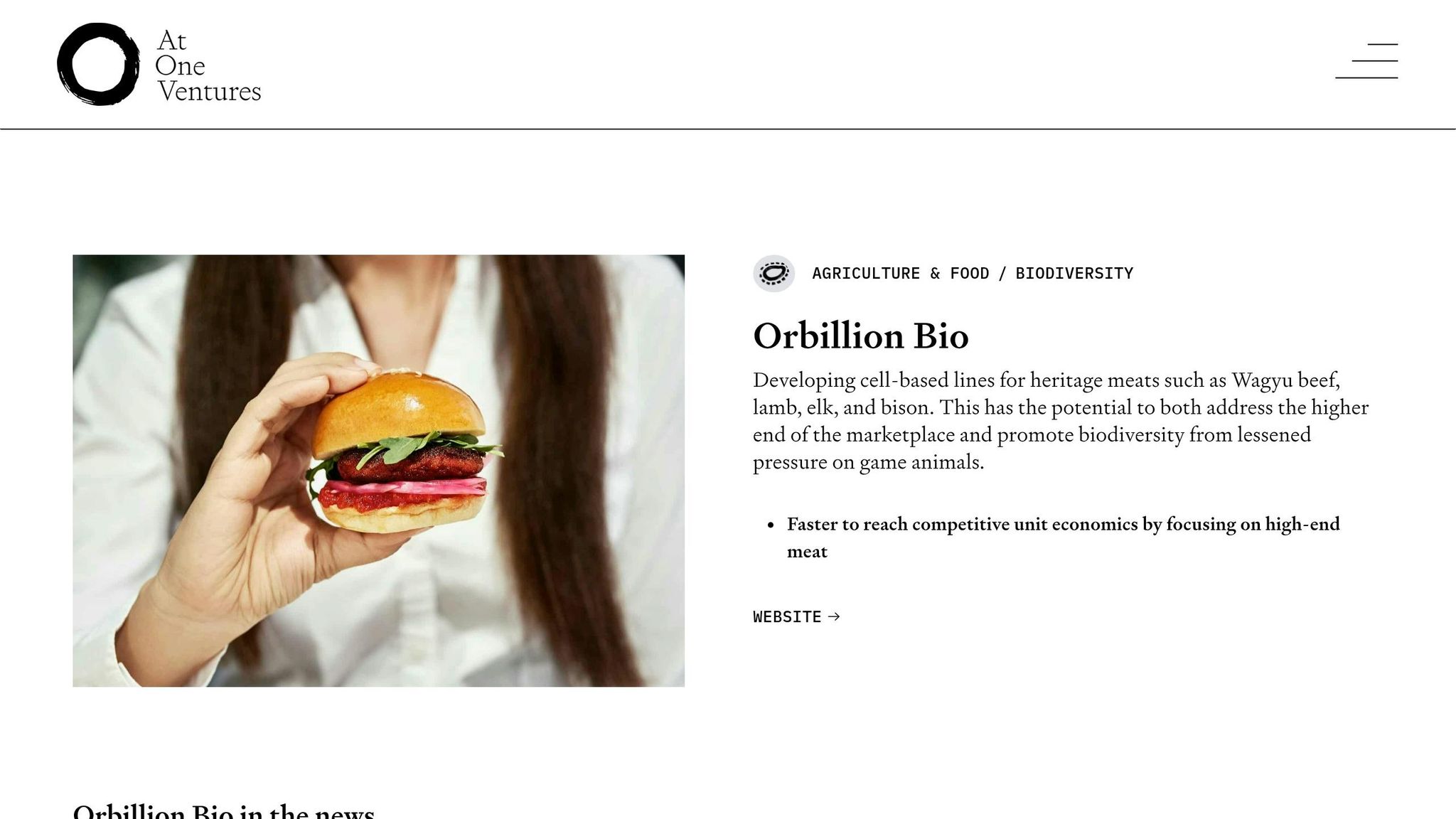
Orbillion Bio made a significant move into the Middle Eastern market by joining Hub71's 16th Cohort in Abu Dhabi's Hub71+ ClimateTech. This programme, one of the UAE's leading tech accelerators, provided Orbillion with access to local networks, investors, and government-backed initiatives focused on sustainable food systems [9].
In November 2025, Orbillion Bio was acquired by Fork & Good, a company specialising in cultivated meat biomanufacturing. This merger brought together Orbillion's expertise in scaling premium beef muscle cells and Fork & Good's efficient production systems, creating a global platform for cultivated red meat [9][10]. Following the acquisition, Patricia Bubner, Orbillion's co-founder, stepped into the role of COO, and the company established a subsidiary in the Abu Dhabi Global Market (ADGM) to solidify its presence in the region.
"The combination of our strengths allows us to deliver greater value to our customers by offering a broader portfolio of products and a stronger foundation for long-term partnership." - Patricia Bubner, COO, Fork & Good (formerly CEO of Orbillion Bio) [9]
Orbillion's focus is on premium heritage cuts like Wagyu beef, lamb, and elk, aiming to reach price parity with conventional beef. This strategy aligns well with Middle Eastern dining preferences, where beef and lamb are staple proteins. The company demonstrated its ability to scale production by completing a 200-litre production run of cultivated Wagyu beef in less than 30 days [12]. By concentrating on premium cuts, Orbillion supports local food security by reducing dependence on imported meat, a critical issue in a region that imports approximately 95% of its food [3].
Operating under a B2B ingredients model, Orbillion supplies cultivated muscle and fat cells to food manufacturers. These ingredients are used in products like burgers, sausages, and dumplings [9][10]. This approach directly supports the UAE's National Food Security Strategy by offering a resilient alternative to traditional livestock supply chains, aligning with the country's push for greater self-sufficiency.
To date, Orbillion has raised $15 million in funding [12], with backing from investors like VentureSouq [11]. The company is targeting an annual output of 4 million pounds of cultivated meat and aims to achieve price competitiveness with conventional beef in the long run [12].
3. Future Meat Technologies
Future Meat Technologies, now operating as Believer Meats since its rebranding in 2022, is an Israeli biotech company based in Rehovot. The firm made waves by launching the world’s first industrial-scale cultivated meat production facility in Israel, capable of producing up to 500 kg of meat daily [13]. With this milestone under its belt, the company is now turning its attention to fostering regional collaborations.
Believer Meats has teamed up with Abu Dhabi's AgriFood Growth & Water Abundance (AGWA) cluster to set up a regional headquarters, research and development centre, and manufacturing hub in Abu Dhabi. This partnership aims to tackle food security issues across the MENA region. Additionally, the company is collaborating with local authorities to simplify the certification process for cultivated meat products [1].
"By leveraging AGWA's innovative framework and support, we are confident that we can address food security challenges and bring our safe, healthy, and delicious cultivated meat products to the MENA region and beyond." - Gustavo Burger, CEO, Believer Meats [1]
One of the standout features of Believer Meats’ technology is its cell media recycling system, which reuses cell culture media to minimise waste and improve production efficiency. This approach is reported to be 17 times more efficient than typical industry methods [1], enabling the company to produce about 13 times more meat than its competitors [14]. Even more impressively, the cost of its animal-free culture medium is up to 100 times lower than standard alternatives, allowing the company to reduce production costs to under £12.80 per pound. This cost advantage strengthens its position in the Middle Eastern market [13][14].
To complement its technological advancements, the company has launched the Believer Meats Innovation Academy in partnership with Abu Dhabi universities and research institutions. This initiative aims to cultivate local expertise in the field of cultivated meat production [1]. By combining cutting-edge efficiency with a focus on skill development, Believer Meats is establishing itself as a forward-thinking leader in the Middle East’s cultivated meat sector.
sbb-itb-c323ed3
4. Mirai Foods
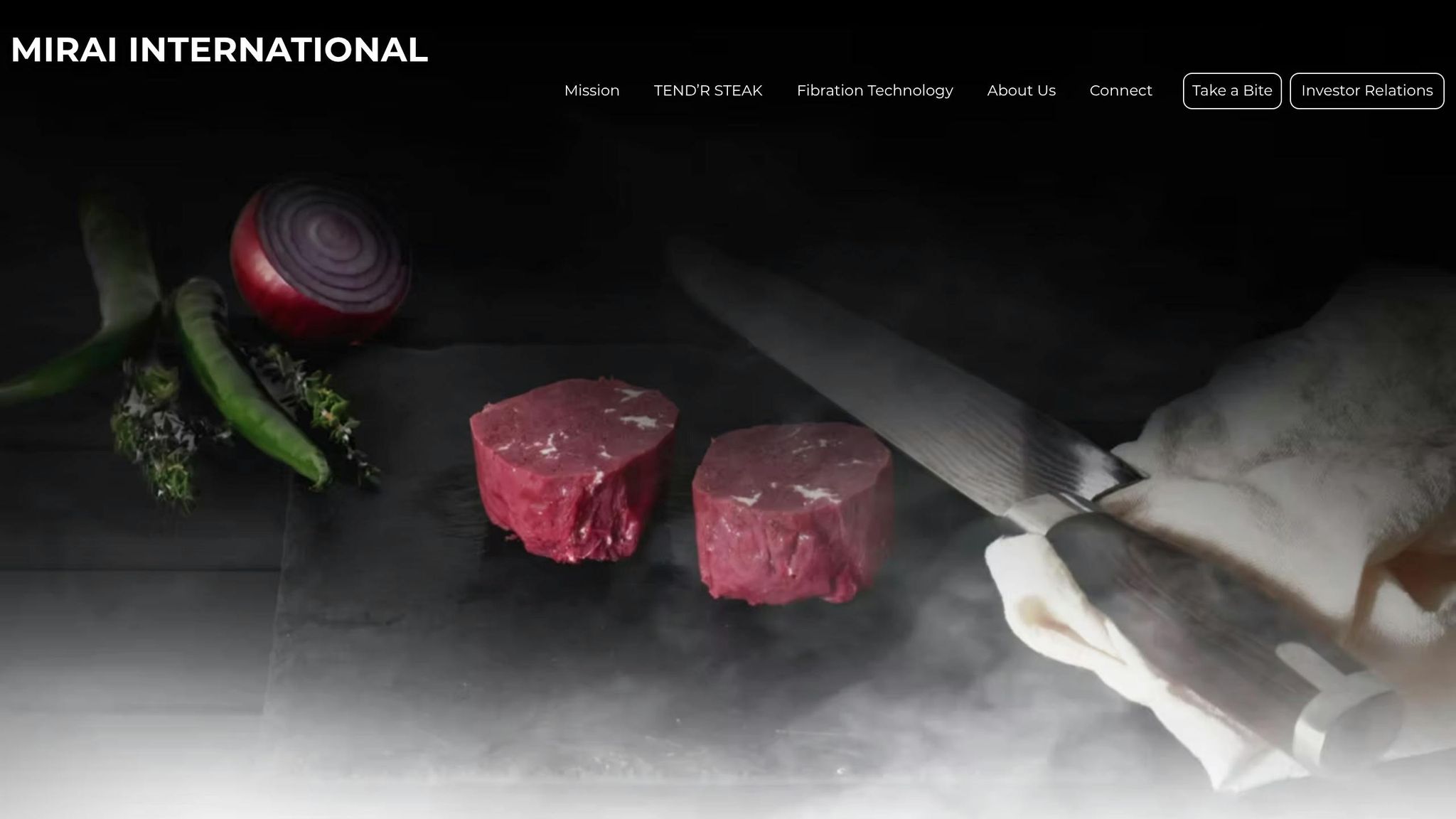
Mirai Foods, a Swiss-founded company operating globally as Mirai International, is stepping into the cultivated meat market with a focus on premium beef. Their flagship product, TEND'R STEAK, offers top-tier cuts like Sirloin, Rib Eye, and Flank Steak [15]. This focus on whole-cut beef aligns well with consumer preferences in the Middle East, where beef is the second most popular protein in restaurants, following chicken [2].
The company employs its own proprietary technology to create cultivated meat from natural, non-GMO cells [15]. While many competitors emphasise large-scale production, Mirai Foods has chosen to cater to the high-end segment, tailoring their offerings to meet specific market tastes.
With 81% of consumers across six Middle Eastern countries - Egypt, Israel, Kuwait, Qatar, Saudi Arabia, and the UAE - expressing willingness to buy cultivated beef [2], Mirai Foods is poised to tap into this growing demand.
Beyond meeting consumer preferences, Mirai Foods also addresses critical food security challenges in the region. In Saudi Arabia, for example, approximately 80% of food is imported [16]. Expanding local cultivated meat production could help strengthen food resilience. Moreover, producing cultivated meat offers significant environmental benefits by requiring less land and water compared to traditional farming methods - an essential advantage in a region where these resources are limited [4][17]. This approach aligns with the Middle East's broader goals of enhancing food security and exploring sustainable protein solutions.
Comparison Table
Comparison of key attributes for a leading Middle Eastern startup:
| Startup | Country of Origin | Middle East Presence | Main Product Focus | Stage of Development | Key Regional Contribution |
|---|---|---|---|---|---|
| Believer Meats (formerly Future Meat Technologies) | Israel | Active – planning a regional headquarters and production facility in Abu Dhabi, UAE [1] | Cultivated chicken | Advanced – Received USDA approval in October 2025 and planning an Abu Dhabi expansion [18] | First non-US startup to gain USDA approval [18]; pioneering halal certification frameworks with local authorities [1] |
The table highlights essential details about a regional leader in the cultivated meat industry. The UAE is positioning itself as a commercial hub, and Believer Meats' upcoming facility in Abu Dhabi, developed alongside the AGWA cluster, is a prime example of this trend [1]. In the Middle Eastern market, halal compliance plays a pivotal role, and engaging early with local authorities can pave the way for long-term success [1][2]. Companies that invest in local infrastructure, achieve regulatory milestones, and work towards halal certification for cultivated meat are well-equipped to seize opportunities in this growing sector. These developments underscore the region's commitment to advancing sustainable, locally produced cultivated meat solutions. This progress aligns with the broader cultivated meat roadmap for global market entry.
"Partnering with AGWA represents a significant step forward in our mission to create a global powerhouse of cultivated meat solutions bringing products to new strategic markets."
- Gustavo Burger, CEO, Believer Meats [1]
Conclusion
The Middle East is quickly establishing itself as a key player in the global cultivated meat industry. Faced with challenges like severe water scarcity, limited farmland, and heavy reliance on imports, the region's embrace of cultivated meat is more than just an ethical decision - it’s a strategic move. Both governments and private investors are actively supporting this transition, with efforts focusing on infrastructure development, regulatory progress, and pathways for halal certification. Together, these initiatives highlight a regional drive towards producing sustainable, locally sourced protein.
Consumer interest is also growing, with 87% of informed Middle Eastern consumers expressing a willingness to buy cultivated chicken [2]. This rising demand is being matched by the development of the necessary commercial and production infrastructure.
For those in the UK wondering how this trend might unfold closer to home, Cultivated Meat Shop serves as a helpful resource. As of May 2026, cultivated meat products are not yet approved for sale in the UK. However, the Food Standards Agency is actively working through its review process [19]. By keeping an eye on updates from Cultivated Meat Shop, UK consumers can stay informed about global industry momentum, upcoming products, and scientific breakthroughs as cultivated meat edges closer to British markets.
FAQs
When will Cultivated Meat be available to buy in the UAE and wider Middle East?
There’s no confirmed timeline for when cultivated meat will hit the shelves in the UAE or the broader Middle East. Companies are actively working on setting up production facilities and ensuring they meet both regulatory standards and halal certification requirements. If you’re curious and want to keep up with the latest developments in this space, the Cultivated Meat Shop offers regular updates and educational materials to help you stay informed.
Will Cultivated Meat be halal-certified in Gulf countries?
Cultivated meat has the potential to be halal-certified in Gulf countries, provided it adheres to certain strict criteria. These include sourcing cells exclusively from animals that have been slaughtered in compliance with Islamic law. Additionally, the growth media and all other ingredients must be free from any prohibited substances, such as pork, blood, or alcohol. Efforts are underway, with companies collaborating with regional authorities to create certification pathways. Meanwhile, Cultivated Meat Shop plays a role in keeping consumers updated on these advancements.
How does cultivated meat compare on taste and nutrition to conventional beef and chicken?
Cultivated meat is essentially the same as conventional beef or chicken at a biological level, as it’s grown from actual animal cells rather than relying on plant-based ingredients. Developers are working to ensure it matches or even improves upon the nutritional profile of traditional meat, with some processes incorporating additional nutrients. Early taste tests indicate it comes very close to replicating the flavour and texture of regular meat, although slight variations in fat content or richness might be noticeable. The industry is actively fine-tuning these elements to provide a more authentic eating experience.