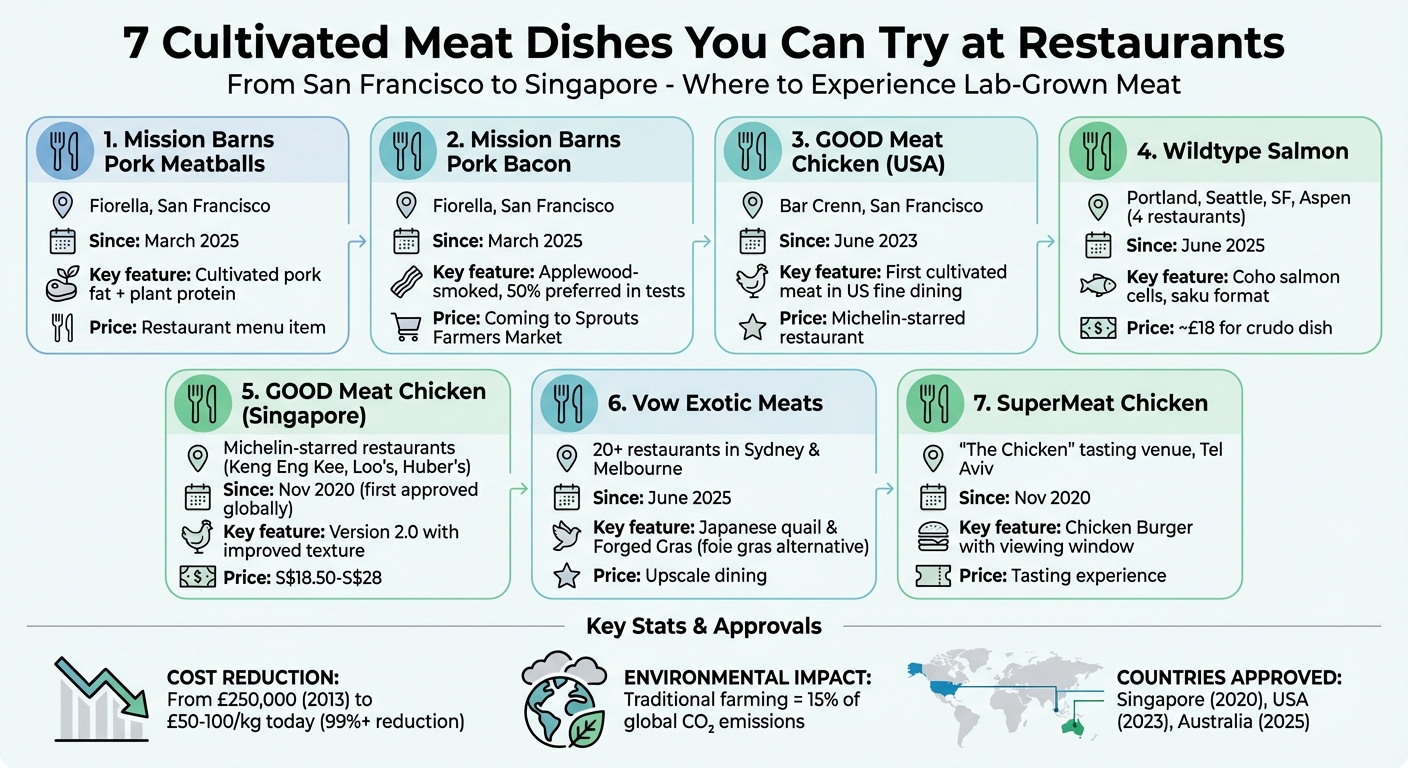
Cultivated meat, grown from animal cells in bioreactors, is now available on select menus worldwide. From Michelin-starred restaurants in Singapore to high-end eateries in San Francisco and Australia, these dishes offer a new way to enjoy meat without traditional farming. Here's a quick guide to seven standout options:
- Mission Barns Pork Meatballs and Bacon: Available at Fiorella in San Francisco since 2025, these combine cultivated pork fat with plant proteins for a rich, familiar taste.
- GOOD Meat Chicken: Served at Bar Crenn in San Francisco and Michelin-starred restaurants in Singapore, this option mirrors the flavour and texture of traditional chicken.
- Wildtype Salmon: Launched in 2025, chefs in Portland, Seattle, and San Francisco use this cultivated salmon in raw and smoked dishes.
- Vow Exotic Meats: In Australia, cultivated Japanese quail and Forged Gras are featured on menus in Sydney and Melbourne.
- SuperMeat Chicken: Available for tastings at "The Chicken" in Tel Aviv, this cultivated chicken offers a crispy, tender experience.
Cultivated meat is gaining traction for its potential to reduce reliance on conventional farming. With regulatory approvals expanding, these dishes could soon become more accessible.
7 Cultivated Meat Dishes Available at Restaurants Worldwide
1. Mission Barns Cultivated Pork Meatballs at Fiorella, San Francisco
Taste and Flavour Profile
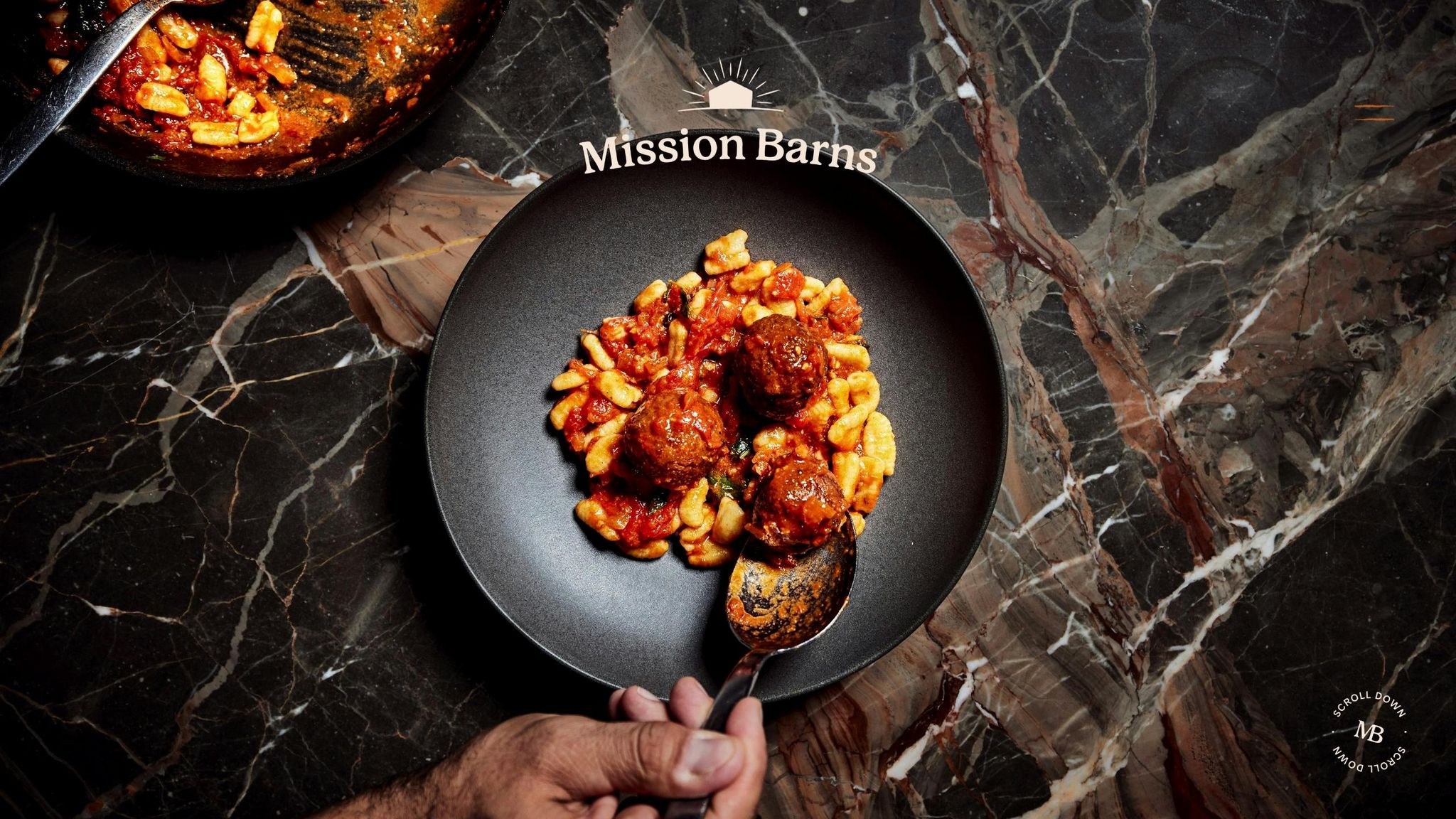
These meatballs combine a plant-based protein foundation with cultivated pork fat, creating a flavour and texture that closely resemble traditional pork. Infused with Italian herbs, they align perfectly with Fiorella's menu, offering a rich and satisfying taste experience.
Preparation Methods and Culinary Creativity
Chef Brandon Gillis collaborated with Mission Barns for two years to refine these meatballs. The cultivated pork fat not only browns beautifully but also crisps up just like conventional pork, delivering a texture that feels authentic and indulgent.
"The texture was really good and it crisped up really nicely. They understand that if their product is not delicious then it won't resonate in the market." – Brandon Gillis, Chef and Co-owner, Fiorella
Availability at Restaurants
After perfecting the recipe, these meatballs are now available to diners. Following FDA approval in March 2025, they made their debut at Fiorella's San Francisco locations and are expected to roll out soon in select Sprouts Farmers Market stores[5].
2. Mission Barns Cultivated Pork Bacon at Fiorella, San Francisco
Taste and Flavour Profile
Mission Barns' applewood-smoked bacon brings the familiar taste of traditional bacon with a modern twist. The secret lies in its unique fat-first approach: a blend of plant protein and cultivated pork fat cells grown in bioreactors. This combination delivers that juicy, rich mouthfeel bacon enthusiasts know and love. In pre-launch tests conducted ahead of its March 2025 debut, half of the participants actually preferred this bacon over conventional options[5]. The applewood smoking process enhances the flavour, adding those classic smoky notes that bacon fans crave.
Preparation Methods and Culinary Creativity
This bacon holds its own in the kitchen, offering a crispy texture that chefs can depend on. Chef Brandon Gillis worked closely with Mission Barns for nearly two years to perfect the product for Fiorella's menu across its four San Francisco locations[5]. The cultivated pork fat browns beautifully during cooking, mimicking the behaviour of traditional bacon, which makes it a versatile and reliable choice for chefs. These fine-tuned details set the stage for its exclusive debut at Fiorella.
Availability at Restaurants
In March 2025, the FDA gave Mission Barns the green light to sell cultivated pork, making it the first company in the United States to do so. Fiorella introduced the bacon during its weekly dinner events, where it quickly became a standout menu item across all its San Francisco locations[5]. But the excitement doesn’t stop there. Mission Barns has announced plans to bring this bacon to Sprouts Farmers Market, marking a major milestone as cultivated meat hits U.S. supermarket shelves for the first time[5]. Backed by over $60 million in funding, the company is ramping up production with the goal of making its products as affordable as traditional meat[5].
3. GOOD Meat Cultivated Chicken at Bar Crenn, San Francisco
Taste and Flavour Profile
GOOD Meat's cultivated chicken offers the familiar taste and texture of traditional chicken, crafted using chicken cells grown in bioreactors. The result? Meat that’s virtually indistinguishable from its conventional counterpart. At Bar Crenn, a restaurant renowned for its French-inspired sophistication, diners enjoyed this cultivated chicken seamlessly integrated into dishes that matched the restaurant's high standards. This culinary achievement demonstrated that cultivated meat could hold its own in Michelin-starred dining, opening doors to exciting possibilities in gourmet cuisine.
Preparation Methods and Culinary Creativity
Chef Dominique Crenn embraced the versatility of GOOD Meat's cultivated chicken, appreciating its ability to be seared, roasted, and absorb flavours just like traditional chicken. These qualities gave her the freedom to create dishes that aligned with her vision of sustainable gastronomy. By showcasing this ingredient in her three-Michelin-starred kitchen, Chef Crenn helped reframe cultivated meat, transforming it from a scientific innovation into a credible and exciting option for fine dining[6][3].
Availability at Restaurants
Bar Crenn introduced cultivated chicken to its menu in June 2023, following the necessary approvals from the USDA and FDA[6][4]. This marked a major milestone - cultivated meat was no longer just a futuristic concept but a reality available to discerning diners. The launch not only confirmed the product's safety but also highlighted its potential to thrive in the world of gourmet dining, offering a unique experience at one of the United States’ most prestigious restaurants.
Sustainability and Ethical Impact
Chef Crenn’s decision to serve cultivated chicken reflects a dedication to sustainable and ethical dining. By offering a product that combines authentic flavour with a reduced environmental footprint, she set a new standard for high-end dining that prioritises both taste and responsibility[6][3].
4. Wildtype Cultivated Salmon at Select US Restaurants
Taste and Flavour Profile
Wildtype's cultivated salmon brings a distinct culinary experience to the table. Unlike wild-caught salmon, it carries a subtly savoury flavour with buttery richness and a hint of umami. Made from coho salmon cells combined with carefully chosen plant-based ingredients, it offers a mochi-like, squishy texture rather than the flaky, fibrous feel of traditional salmon fillets. Adam H. Callaghan from Food & Wine described the flavour in a crudo preparation as "bright and enjoyable", while noting that the unique texture reveals its cultivated origins [7].
Preparation Methods and Culinary Creativity
Chefs are embracing the unique qualities of Wildtype salmon, using it to create imaginative dishes. Its saku format works particularly well in raw, smoked, or lightly prepared recipes. In June 2025, Chef Gregory Gourdet at Kann in Portland became the first to serve Wildtype's salmon commercially. He crafted a dish featuring house-smoked salmon paired with pickled strawberries, spiced tomatoes, and roasted watermelon. Meanwhile, Chef Renee Erickson at The Walrus and the Carpenter in Seattle introduced a salmon crudo. This dish combined cubes of salmon saku with honeydew, cantaloupe, crispy shallots, and serrano chillies, priced at around £18. Erickson highlighted the importance of balancing the salmon’s delicate flavour with complementary ingredients [7].
Availability at Restaurants
Following FDA clearance on 28 May 2025, Wildtype salmon debuted at four select restaurants across the US: Kann in Portland, The Walrus and the Carpenter in Seattle, Robin in San Francisco, and Hai Sí in Aspen. A fifth partner is anticipated to join in early 2026. Previously offered at Otoko in Austin, Texas, the salmon was later moved to Hai Sí due to state-level restrictions on cultivated meat sales in Texas [7].
Sustainability and Ethical Impact
One of the key appeals of Wildtype's cultivated salmon lies in its potential to address environmental concerns. Many chefs have embraced it as a way to reduce the strain on wild fish populations. Chef Renee Erickson explained:
"I want to support something that can hopefully take the stress off of wild salmon and offer a sustainable alternative to farmed salmon, reducing pressure on wild stocks."
Chef Gregory Gourdet echoed similar sentiments:
"We serve it not only for its quality, but also to spark conversation about declining global fish populations and the critical moment we face in protecting ocean health." [7]
5. GOOD Meat Cultivated Chicken at Michelin-Starred Restaurants in Singapore
Taste and Flavour Profile
GOOD Meat's cultivated chicken brings a distinct poultry aroma paired with a rich, savoury taste. Building on earlier versions, the refined Version 2.0 aligns better with Singaporean tastes, particularly in the Michelin-starred dining scene. It boasts a more natural texture, resembling whole-muscle chicken, with long, fibrous strands similar to roasted chicken thigh [25, 26]. Chef John Taube praised it, saying:
"The chicken's fantastic. I mean, I would never have known. The flavour is incredible" [8].
This revamped version inspires chefs in Singapore to reimagine classic dishes using cultivated chicken.
Preparation Methods and Culinary Creativity
Michelin-recognised restaurants in Singapore have embraced the versatility of cultivated chicken, incorporating it into traditional dishes. At Keng Eng Kee, chefs prepare charcoal-grilled satay skewers served with peanut sauce and pineapple salsa. Loo's Hainanese Curry Rice offers deep-fried chicken bites in a rich coconut curry sauce. Meanwhile, Huber's Butchery features options like grilled kebabs, deep-fried strips paired with orecchiette pasta (priced at S$18.50), and fried chicken skin as a crunchy salad topping. For S$28, diners can enjoy a set meal that includes kebab, salad, and stew [2, 24, 25, 27]. Even open-fire cooking expert Francis Mallmann, after tasting the cultivated satay at Keng Eng Kee, described it as:
"delicious" [8].
Availability at Restaurants
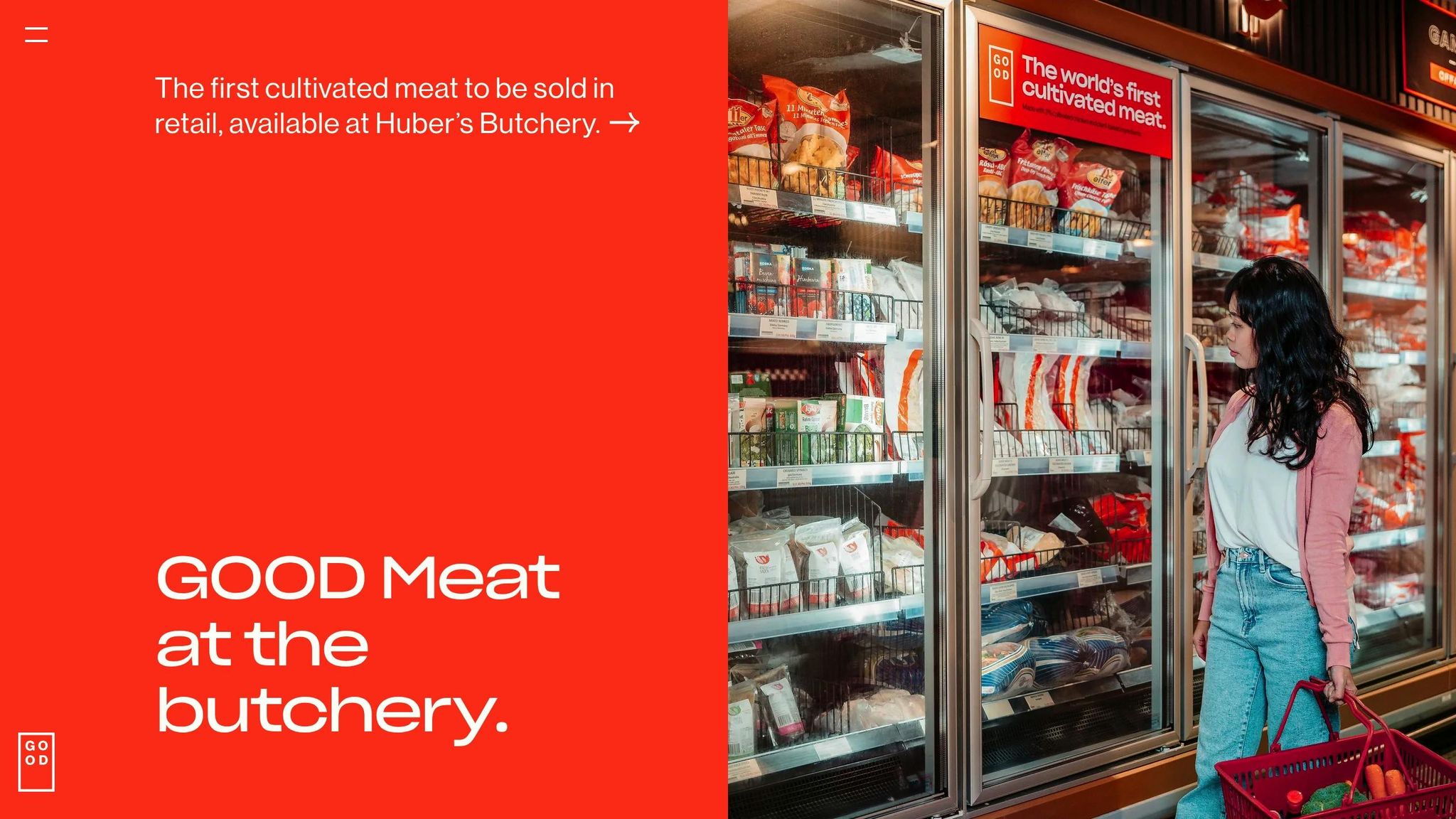
GOOD Meat achieved a milestone in November 2020, becoming the first cultivated meat approved for sale in Singapore [9]. However, its availability remains limited due to production challenges. Currently, diners can primarily sample these dishes at Huber's Butchery and Bistro, where dining slots are scarce. To address this, the company has invested $61 million in a new facility in Singapore. This facility, equipped with 6,000-litre bioreactors, aims to produce "tens of thousands of pounds" of cultivated chicken annually, promising greater availability in the near future [25, 27]. For now, these limited-edition dishes not only offer a unique dining experience but also represent a step toward a more sustainable future.
Sustainability and Ethical Impact
As a slaughter-free option, cultivated chicken offers a more ethical and environmentally friendly alternative to conventional meat. Traditional meat and dairy production contribute around 15% of global greenhouse gas emissions [3]. To make this option more accessible, GOOD Meat subsidises its prices to compete with premium or organic conventional chicken [26, 27]. By doing so, they aim to encourage wider adoption and support a shift towards more responsible dining choices.
sbb-itb-c323ed3
6. Vow Cultivated Exotic Meats at Upscale Restaurants in Australia
Taste and Flavour Profile
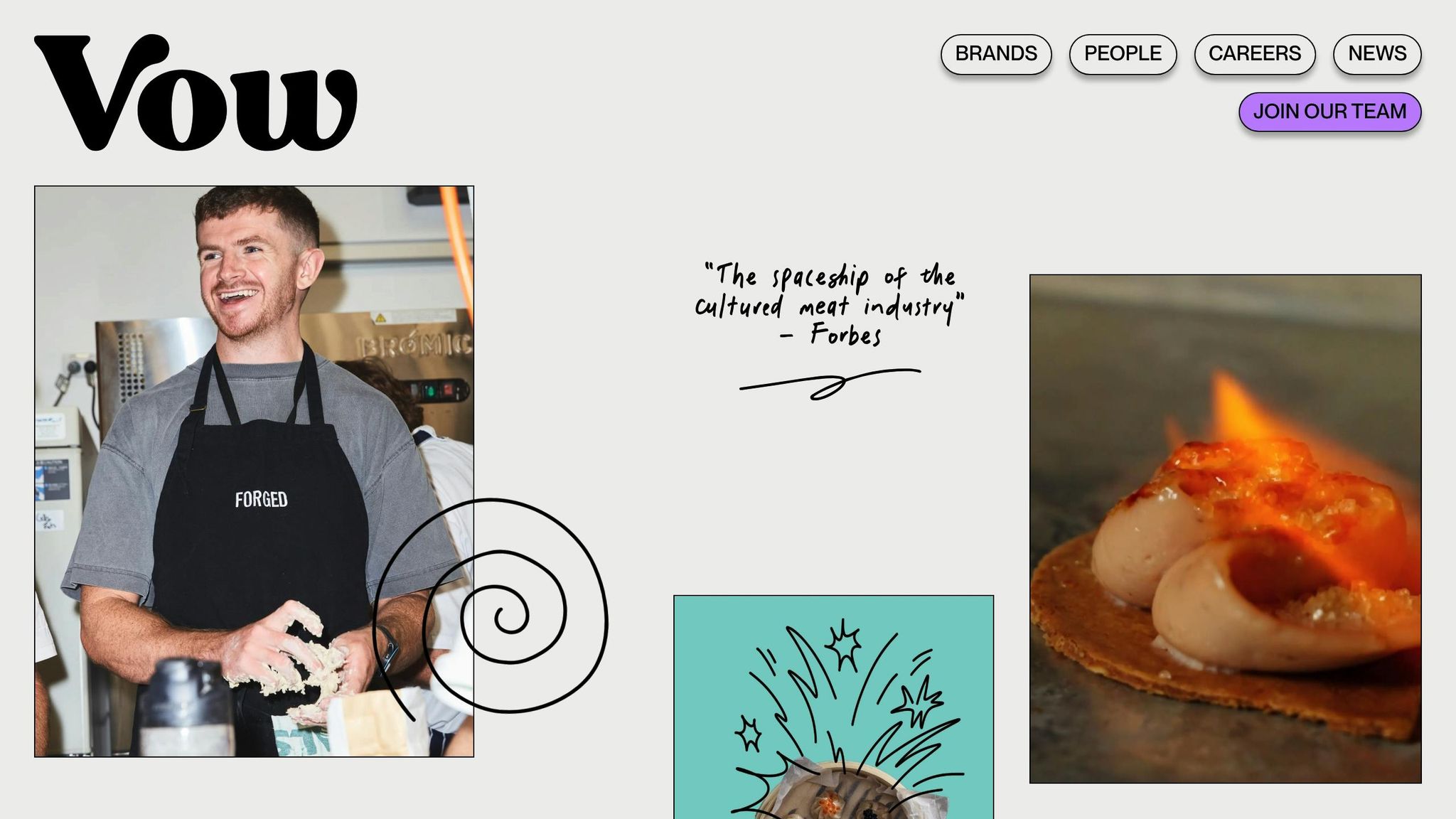
Vow has introduced cultivated Japanese quail to the culinary world, creating meats that are rich in umami and packed with flavour. Critics have noted its earthy, fungi-like undertones and a soft, pâté-like texture reminiscent of bone marrow. Their standout product, Forged Gras, captures the indulgent, melt-in-your-mouth essence of traditional foie gras, with a hint of gamey depth that adds character [10][14][15]. Melissa Woodley from Time Out Australia described the smoked cultured quail spread as "like a campfire in buttery form", while food critic Sudeshna Ghosh called it "revelatory" [10][15].
Preparation Methods and Culinary Creativity
Chefs across Australia are pushing the boundaries of culinary innovation with these cultivated meats. Restaurants such as Maiz in Sydney, Kitchen by Mike, and Bottarga in Melbourne are incorporating these products into imaginative dishes. At Maiz, Head Chef Juan Carlos Negrete Lopez has crafted a dish featuring Forged Gras elegantly placed atop a blue corn huarache, paired with flat iron steak, huitlacoche bearnaise, and a barbacoa glaze [13]. The Waratah serves pan-fried Forged Gras alongside steak tartare [15], while Bottarga in Melbourne offers a cultured quail parfait, styled like a "cigar" and accompanied by foie gras snow and chives. The entire process of cultivating these meats, from cell selection to harvest, takes approximately 79 days [15].
Availability at Restaurants
Australia made headlines as the third country to approve cultivated meat when Vow received regulatory clearance in June 2025 [11]. Since then, more than 20 restaurants in Sydney and Melbourne have added Forged products to their menus [10]. Notable venues include Nel in Surry Hills, Kitchen by Mike in Sydney's CBD, The Waratah, Bottarga, and Lana. To support this expansion, Vow operates a 40,000-litre manufacturing facility in Sydney, boasting production costs that are reportedly 20–50 times lower than those of its competitors [12]. This development positions cultivated meat as an increasingly prominent feature on fine dining menus worldwide.
Sustainability and Ethical Impact
Forged Gras offers a cruelty-free alternative to traditional foie gras by eliminating the need for force-feeding to enlarge bird livers [14]. Similarly, Vow's Forged Parfait incorporates 60% cultivated Japanese quail, blended with complementary ingredients to enhance its flavour [14]. George Peppou, Vow's CEO, has shared the company’s vision:
"Our goal is for diners to see forged gras on menus at top-tier restaurants, not as an alternative protein but as an exciting new meat product for meat eaters" [14].
While the production process uses significantly less land and water compared to conventional farming, experts point out that it remains energy-intensive. To fully realise its environmental benefits, renewable energy sources will be essential [16].
7. SuperMeat Cultivated Chicken at Partner Restaurants for Tastings
Taste and Flavour Profile
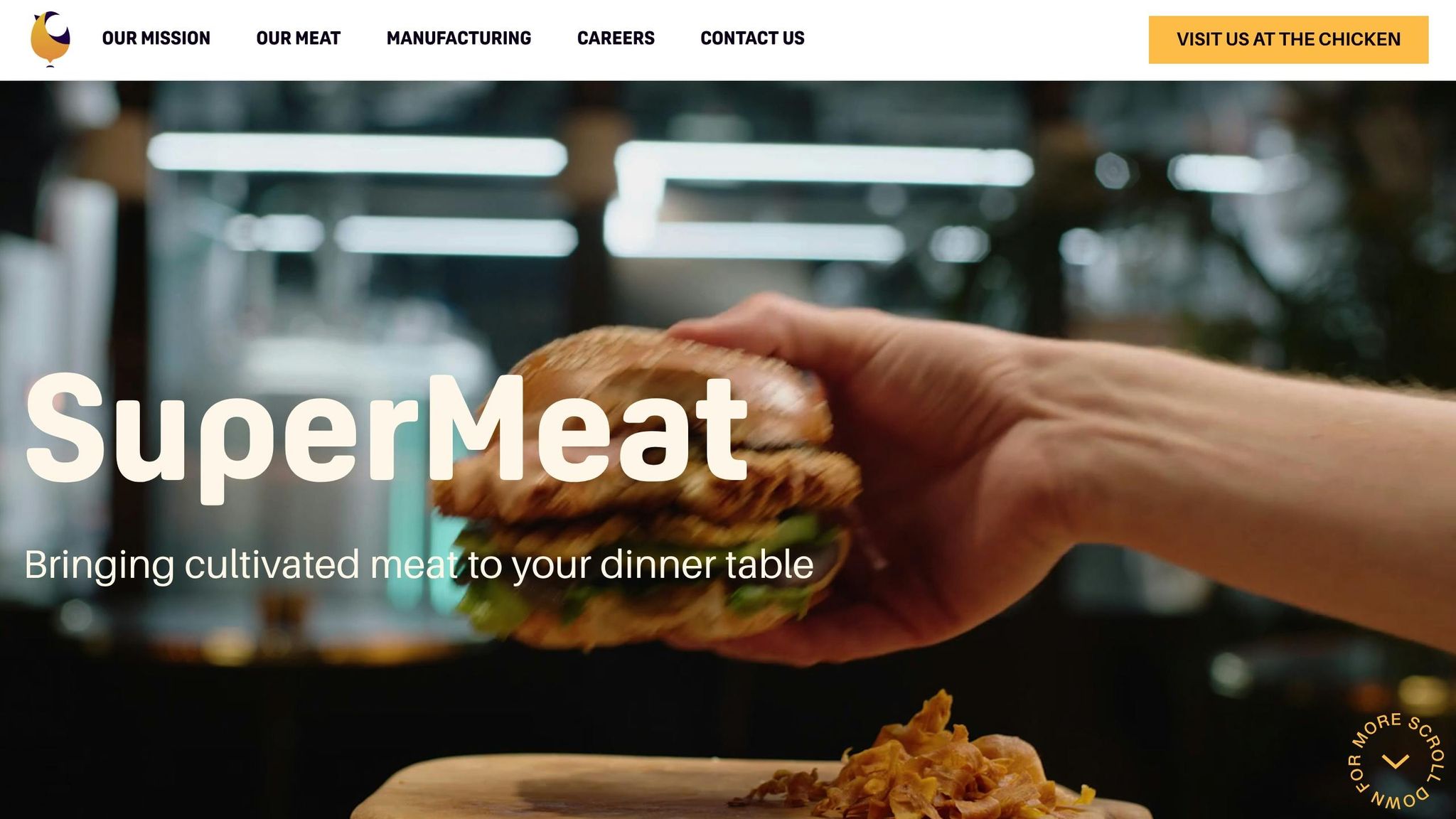
SuperMeat's cultivated chicken offers a flavour and texture experience that tasting panels describe as indistinguishable from traditional chicken. It's juicy, crispy on the outside, yet tender on the inside - qualities that shine in their signature Chicken Burger. This dish features a crispy cultured chicken fillet served on a brioche bun, showcasing the product's authentic taste. The meat itself is created from avian stem cells, making it biologically identical to chicken raised on farms. CEO Ido Savir captures the experience perfectly:
"The burger has a juicy chicken flavor, crispy on the outside and tender on the inside." [17]
This breakthrough in taste has opened the door to exciting dining opportunities.
Availability at Restaurants
In November 2020, SuperMeat unveiled "The Chicken" in Tel Aviv, Israel. This unique venue operates as the world's first restaurant-style production kitchen for cultivated meat. Through a glass window, visitors can witness the production process while enjoying a tasting experience. Guests, which include industry professionals and food enthusiasts, are invited to sample the Chicken Burger in exchange for their feedback. Led by CEO Ido Savir, the facility produces several hundred pounds of cultivated chicken each week, offering a glimpse into the future of food production. [17]
Sustainability and Ethical Impact
SuperMeat's cultivation process is a step forward in ethical and sustainable meat production. Using avian stem cells that can multiply indefinitely, the process eliminates the need for animal slaughter. Once the desired cell mass is reached, about 50% of the mature meat can be harvested daily. As CEO Ido Savir explains:
"This process is equivalent to continuously harvesting half the output of a farm of 1,000 mature chickens." [17]
The production method is entirely animal-serum free, avoiding the use of foetal bovine serum, which is typically part of cell cultivation. By moving away from overcrowded factory farms, it also reduces the use of antibiotics and lowers the risk of zoonotic diseases. SuperMeat aims to achieve cost parity with premium restaurant chicken within one to two years and match the cost of traditional retail chicken within five to seven years. [18]
Restaurants are serving 'cultured meat' - but what is it, and why eat it?
Conclusion
Cultivated meat is reshaping the way we think about food by offering the flavours and textures we know and love, while also tackling the ethical and environmental issues tied to traditional livestock farming. With conventional farming accounting for about 15% of global CO₂ emissions[1][2][3], this new approach provides a promising alternative.
What’s even more striking is how far the cost of producing cultivated meat has come. Back in 2013, the first lab-grown burger cost a staggering £250,000. Today, small-scale production estimates have dropped to around £50–100 per kilogramme - a reduction of over 99% in just a decade[19]. As regulatory approval processes expand beyond Singapore and the United States, with the UK and EU working on their own frameworks, we’re likely to see more restaurants adding these dishes to their menus soon.
"The future of meat isn't about replacement - it's about evolution. By cultivating the cells that have always been at the heart of the meat we consume, we're not creating something entirely new, but rather finding a better way to produce what we've always enjoyed."[19]
Restaurants around the world are already starting to bridge the gap between lab innovation and dining tables, making cultivated meat a tangible option for curious diners. If you’re keen to try it yourself, keep an eye on pioneering restaurant launches and sign up for early access notifications at Cultivated Meat Shop to stay updated on the latest developments.
Whether your interest stems from sustainability, animal welfare, or pure culinary exploration, cultivated meat offers an exciting opportunity to rethink what’s on your plate and how it gets there.
FAQs
How does cultivated meat benefit the environment compared to traditional farming?
Cultivated meat offers a much smaller environmental footprint compared to traditional livestock farming. By producing meat directly from animal cells, it dramatically reduces the need for land, which helps curb deforestation and safeguards natural habitats. It also requires significantly less water, eliminating the need for large-scale irrigation or watering of livestock. On top of that, cultivated meat cuts out methane emissions from animals and reduces agricultural waste that can contaminate waterways.
The environmental benefits become even more impressive when renewable energy is used in the production process. Research indicates that cultivated meat could result in up to 96% fewer greenhouse gas emissions, require 99% less land, and use 82–96% less water than conventional meat. These factors position it as a promising alternative for addressing climate change, conserving natural resources, and preserving ecosystems.
Does cultivated meat taste and feel the same as conventional meat?
Cultivated meat aims to closely mimic the taste and texture of traditional meat, though there are subtle distinctions. Many who try it describe the flavour as slightly sweeter and cleaner compared to the richer, sometimes fattier profile of conventional meat. The savoury umami notes are still present, but cultivated meat often benefits from a touch more seasoning to deepen its flavour.
When it comes to texture, products like burgers, sausages, and nuggets are nearly identical to their traditional versions, offering comparable juiciness and chew. Whole cuts, such as steaks, remain a work in progress as researchers refine the fibrous grain and marbling to match conventional options. That said, ongoing advancements in technology are steadily closing the gap, creating cultivated meat that not only looks but also feels more like traditional cuts, all while delivering a consistently clean taste.
How is cultivated meat produced in bioreactors?
Cultivated meat begins its journey with a tiny sample of animal cells, often muscle or stem-like cells, which are then nurtured in a sterile, temperature-controlled setting. These cells are bathed in a nutrient-packed medium filled with amino acids, vitamins, and growth factors - everything they need to grow and multiply.
Once the cells have expanded sufficiently, they’re moved into a bioreactor. Here, factors like oxygen levels, pH, and temperature are fine-tuned to encourage the cells to develop into muscle fibres and, where necessary, fat cells. To give the meat structure, edible scaffolds may be introduced, helping the cells form tissue that mimics the texture and appearance of traditional meat. After this, the tissue is harvested, seasoned, and prepared just like the meat you’re familiar with.
This entire process takes place in clean, controlled facilities and can be scaled up with larger bioreactors. The result? A reliable way to produce safe, consistent meat - without the need for farming or slaughtering animals.